Sarah Elizabeth Charles: Dawn
3rd October 2025
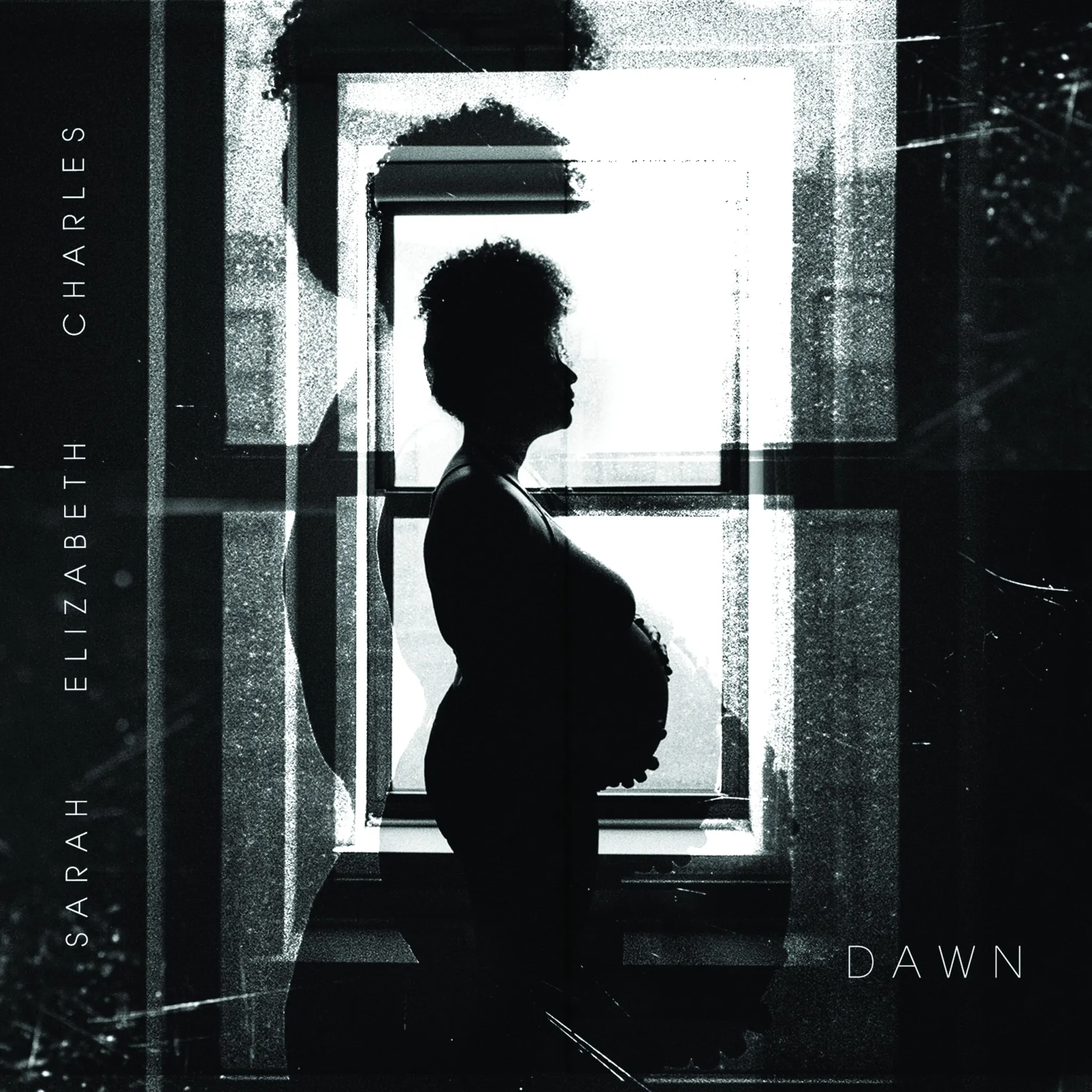
VOCALIST-COMPOSER SARAH ELIZABETH CHARLES TO RELEASE DAWN ON OCTOBER 3, 2025 via STRETCH MUSIC x ROPEADOPE. A NEW ENSEMBLE AND INTIMATE EXPLORATION OF LIFE, LOSS & MOTHERHOOD MARK HER LATEST WORK.
“Ms. Charles has a soulfully articulate vocal style, a mix of strong projection, and subtle detail . . . she connects deeply with her band.” Nate Chinen (New York Times)
“. . . Genre of one . . . Charles is fully in control, and figures to be for a very long time.” Joe Tangari (DownBeat)
“Impeccable technical prowess providing the base for boldly uninhibited expression, all driving sharply shaped political and cultural views: It’s a combination as rare as it is thrilling, bringing to mind Betty Carter and Abbey Lincoln, and, over the past half-decade, the neo-soul-meets-jazz fervor of Sarah Elizabeth Charles.” Christopher Loudon (JazzTimes)
“I’ve been an open book through my music for years and . . . I don’t really see any reason to stop that now. It’s what I’m choosing to share.”
Brooklyn-based vocalist, composer, and educator Sarah Elizabeth Charles has been steadily rising as a singular voice in contemporary jazz since her 2012 album debut. From that time to now, her approach to the genre — both sonically and as a source of scholarship, community building, and social consciousness — has rendered Charles a dynamic force as a performer, collaborator, and changemaker.
In addition to leading her ensemble, SCOPE, for over a decade (a notable achievement in an ever-changing industry), she has also emerged as a powerful advocate for gender justice, incarcerated individuals, and early childhood music education, developing original courses and co-leading programs that center each through organizations and institutions including The New School, Rise2Shine, and Carnegie Hall. Her musicianship, identified by her powerful songwriting, evocative and rich lyrics, and exceptional vocal execution, has been inextricably linked to meaningful themes that hold personal significance. With her fifth album, Dawn, Charles is at her most vulnerable yet — and also her most empowered.
Dawn, is both an expansive and intimate reflection on birthing, loss, joy, grief, hope, and transformation. Written over the course of four years and recorded in 2024 while six months pregnant with her second child, Charles crafted the album in real time, processing the miscarriages she experienced before carrying each of her sons to term, mourning the loss of loved ones, and celebrating the births of her two sons. Across ten exquisite tracks, Dawn reveals the complexities of these experiences with stunning transparency and beauty.
Charles debuts an exciting new ensemble including pianist Maya Keren, bassist Linda May Han Oh, drummer Savannah Harris, violinist Skye Steele, and cellist Marika Hughes — with her husband, pianist and composer Jarrett Cherner, contributing string arrangements. “I’ve released four albums with my longtime band and I’m so grateful for their commitment to my music over the years. In this moment though, I felt ready to work and collaborate with new people. I wanted to challenge myself to do this while moving through a new life experience.”
Beginning with the title, Dawn explores the themes of loss and renewal that have helped shape Charles’s personal and creative journey. Just a month after experiencing her first miscarriage, she lost her older brother, Luke, in 2020. In the years that followed, she also celebrated the births of her two sons. “Luke is derived from the name Lucius, which means ‘the bringer of light,’ or ‘the one born at dawn,’” she explains. “Our first son Tyler’s middle name, Dawn, is in honor of my brother and felt right as the title of this album, symbolizing the light that both of our children have brought into our lives.”
An aural synthesis of raw beauty and honesty, Dawn invites listeners to move through these difficult yet universal themes. The album’s depth leaves no room to hide — from neither the artist nor oneself as the listener. With poignant, suite-like textures and exquisite musicianship, Charles navigates these truths as producer, lyricist, songwriter, and vocalist, with a full spectrum of clarity, courage, and emotional resonance.
“Each song is its own universe,” says Charles.
In that spirit, Dawn brilliantly unfolds, opening with “Rainbow J,” (the first of two celestial interludes), that instantly immerses the listener. Charles’s inspirations for this work are at the heart of this song cycle from the outset: the heartbeat of her son Jaden and the voice of her son Tyler are woven into a tapestry of improvisation and original lullaby. These precious elements, sampled and looped; the distant reverberation of Charles’s layered vocals; and Harris’s soft mallets rising gently beneath, all establishing a spacious, ethereal soundscape.
“Ground” is a gorgeous two-minute bowed bass solo from Oh that brings us gently back to earth, yet it remains suspended in something mystical. It draws on classical traditions without fully belonging to them, as Oh singularly builds a harmonically rich, texturally layered, and emotionally resonant passage. Her bass seems to weep — not out of sorrow, but with a transcendent hope.
Oh’s solo closes by quoting the poignant melody of what becomes “Discovery.” In a seamless transition, subtle layers of instrumentation — including an almost cinematic arrival of a full string section — gradually emerge, expanding the musical vista. By the time Charles delivers the opening line, there is an irresistible submission to the journey the album is embarking on. Harris and Keren enter, and the complete ensemble builds powerfully, ultimately culminating in a breathtaking, multi-layered vamp. On its meaning, Charles says, “It’s both about fearing and welcoming. About how my life was changing — and would change — with the birth of our first son. I knew that I couldn’t control the shifts that were happening in me or who he was going to be. So that ending section, ‘I can’t hold you / time to be true / time to be who you are’ That’s both me speaking to myself and speaking to him.”
“Miracle” blossoms within a fixed sonic, tonal, and harmonic space, compositionally meditative, allowing its atmosphere to “just be,” as Charles describes it. Composed during her pregnancy with her son, Tyler, it embodies the wonder and curiosity that accompanies the anticipation of new life.
Up to this point in the album, Cherner’s affecting string arrangements largely establish both mood and tone. “I’ve loved my partner’s writing and arranging, specifically for strings, for a very long time,” says Charles. “I feel like there’s this clarity in his arrangements that epitomize who he is individually. His quiet, steady support and the grounding that he offers for our family feels musically present here.
“Kick” celebrates the first sensation of Tyler’s in utero movements. Anchored by Harris’s steady mid-tempo groove and Charles’s repeating vocal phrasing, the rhythm section locks into a delicious synchronicity, as Charles’s vocalizations effortlessly shift between ethereal echoes, bellowing scats, and everything in-between. Keren’s addition of Rhodes adds the perfect texture as the band splendidly opens up over the changes. “Kick” joyfully yet reverently channels the otherworldly experience, at once deeply physical and spiritually ancestral, as Charles sings, “Generations move through me.”
“Plans” reckons with the unpredictability of birthing. Written after a STAT C-section, it honors an experience that unfolded far differently than Charles had hoped for — including being unconscious for her son’s first moments and not meeting him until hours after his birth. “At one point, I thought that I had finished the music for this song cycle, but the more I reflected, the more I realized that it felt like there was an experiential piece missing. I hadn’t musically processed my grief for what I hoped the birth would be. “Plans” is my musical exploration of this moment in time.” Beyond the personal, “Plans” also echoes the broader realities of maternal health inequities, as Black and POC women/birthing people in the U.S. face disproportionately high rates of complications and preterm births. With “Plans,” Charles surrenders to what is, offering gratitude for the care she and her baby received.
“Rainbow T,” the counterpart interlude of “Rainbow J,” is embedded in the same in utero heartbeat, toddler vocalization, and improvisation. The interludes each build upon a singular 20-minute improvisation, creating a lo-fi, dreamlike space that draws the listener back to Charles’s most intimate intentions and the emotional center that roots the album.
In contrast to the album’s more intimate tone, “Mother” is described compositionally as “Classic Sarah,” and boldly demands visibility and recognition for birthing people. “I feel like ‘Mother’ is an assertion,” she says. “We don’t actually ‘recognize the sacrifice, we don’t see the contribution, we don’t understand the body, mind, and spirit execution’,” she adds, quoting the powerful lyrics of the chorus. “The actual energy that it takes to move through the experiences of pregnancy, birthing, and mothering. People do not, in my experience, take the time to fathom what that actually is because it’s so common and taken for granted. This song is a call to honor the complexity of the work that often goes unseen and undervalued.” Sparkling solos from Keren, Oh, and Harris underscore Charles’s commanding performance on this anthemic, celebratory piece.
“Angel Spark” addresses miscarriage, a subject rarely explored in music. Originally recorded on her previous album with SCOPE, Charles revisits the piece on Dawn, with her new ensemble and an expanded arrangement that includes gorgeous string arrangements, written by Cherner and beautifully played by Steele and Hughes. Charles softly repeats echoes of “go,” in an intimate moment representing the release of the two beings she miscarried, who she deeply felt to be her daughters. “Who knows who they were or would have been?” she reflects, “but that’s not really what matters — only what feels true and what I felt moved to express.” Charles’s lyrics give language to the grief singular of this maternal experience. Can you love a thing that never was? / Can you mourn anticipation lost? / Can you hold that love so close and let it go? / Oh, let it go.
If “Angel Spark” gives language to the grief, “Questions” steps deeper into the emotional terrain, musing on both the imaginings that often follow loss, and the wonder of the new life before her eyes. A duet between Charles and Oh, the lyrics pose tender queries on the unknowns of life — where we come from, who we become, and the spirits we may have encountered before coming earthside. There’s a hope in the message: that love continues to resonate beyond ourselves and endures in both presence and absence.
With Dawn, Charles triumphantly exhibits the metamorphic power of music. And she maintains what has always been at the heart of her artistry — music as witness, as an offering for transformation, and as testament. “I hesitate to share who I fully am less than I used to,” Charles reflects. “For me, this has been a direct result of motherhood. The experience of having my two sons has given me the permission, the courage, and the power to be my full self, unapologetically.”