New releases

  • Bria Skonberg: Indigo

    3rd July 2026

    Juno Award-winning Vocalist and Trumpet Master Bria Skonberg Issues Indigo via Cellar, Her Vocal-driven Sequel to Brass on July 3, 2026

     Pre order here

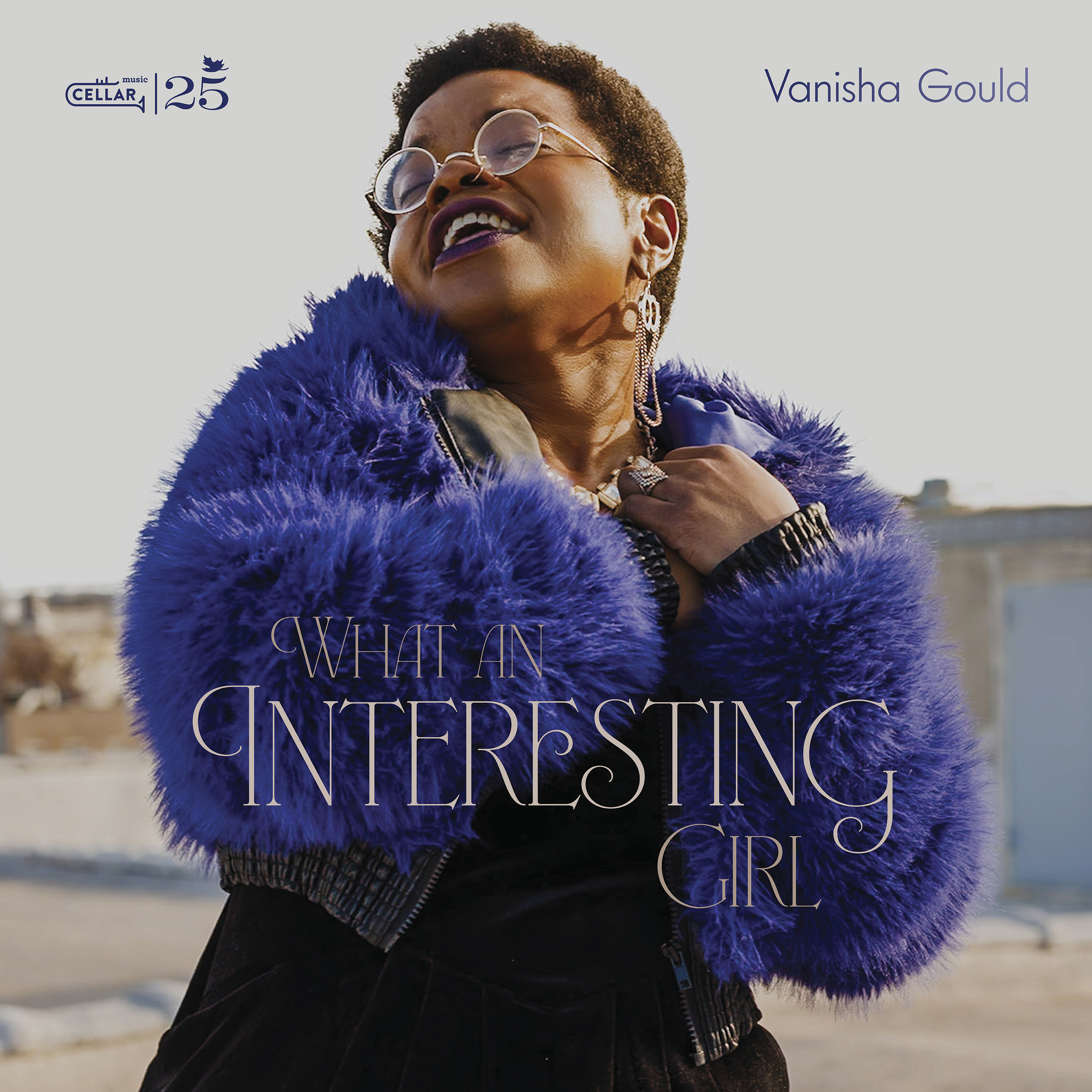
    Juno Award-winning artist Bria Skonberg shares the breadth of her vocal expression with the release of Indigo on July 3, 2026 via Cellar Music Group. The anticipated partner to Brass, her 2026 trumpet-centered meditation, Indigo is a celebration of song, singing, and orchestrating for all the colors of her vocal artistry. Co-produced by Skonberg and her longtime collaborator Matt Pierson, these albums excavate both wholes of her creative identity. “After decades of figuring out where the trumpet and the voice come together,” she says, “I thought it would be interesting and challenging to explore them both, and that was it.” Asked frequently whether she’s a singer who plays trumpet or a trumpet player who sings, in recording Indigo and Brass, Skonberg realized she’s partly neither, and both entirely — a revelation to the artist whom The New York Times calls “the shining hope of hot jazz.”

    “I had to work on them both, individually,” says Skonberg. “It’s always good to come back and sharpen the saw.” Indigo features the foundation of her Brass quartet, Eric Wheeler on bass and Darrian Douglas on drums, plus orchestration from her 2017 With a Twist collaborator, multi-Grammy Award winner Gil Goldstein, who also serves as the album’s pianist, complementing Skonberg’s intimate vocal — and its emotional resonances — with subtleties of tone and color. “What I love about Gil is he has such a huge imagination,” she says. “There was never any doubt he would be the person to arrange the album.”

    The artists assemble a small but mighty orchestra, including Antoine Silverman and Entcho Todorov on violin, Yuko Naito-Gotay on viola, and Emily Brausa on cello, adding a distinct textural warmth from Kathleen Nester on alto flute and Charles Pillow on bass clarinet. “Gil and I settled on some really amazing sound combinations,” says Skonberg, “but once you pull together cello, alto flute, bass clarinet and where my voice sits, it’s just gorgeous.”

    Where Brass captures Skonberg’s range as a technician and a style master, Indigo presents a level of vulnerability Skonberg is able to access vocally because she’s lived through the complexities and absurdities of life. “Indigo is an exploration in nuances: conversations, chemistry, fragility, and sense of self,” she says. “Many of these songs require a certain amount of life experience to be able to understand and interpret them, and at this point I feel like I’ve lived them all.”

    Engineered, mixed and mastered by Christopher Allen, Indigo opens on Michel Legrand’s “Watch What Happens.” Adding a pedal to a partido alto feel, Skonberg bonds sophisticated with steadfast while Douglas’ brushwork creates a buoyancy around the hushed intensity of her vocal. “This song is my current love letter to humanity,” says Skonberg. “I’m hoping that we will see into each other’s hearts and make authentic connections.”

    In back-to-back homage, “I’m Glad There is You” and “Mood Indigo” pay tribute to Sarah Vaughan & Clifford Brown and Miles Davis, respectively. The former transmits a plush, symphonic verse before Skonberg brings the tune into time, spotlighting a mastery over her vocal range: “It’s a beast, vocally, but it’s just a song about gratitude and being grateful for the people we love whether or not they’re with us.” The latter enters the iconic groove from “All Blues,” maintaining that reverence across the tune, including through Skonberg’s muted trumpet. “I like to put little Easter eggs in my albums,” says Skonberg, “for myself and the other jazz listeners.”

    One of two songs appearing on both Brass and Indigo, “Between the Devil and the Deep Blue Sea” serves as something of a metaphor for the dual-album project. “It’s the feeling I have when I’m asked if I’m a singer who plays trumpet or a trumpet player who sings,” says Skonberg. “It sums it up: you’re stuck between two equally difficult decisions [laughs]. Also, the trumpet is the fiery part and the vocal is more the deep blue sea.” Alongside her nimble vocal, she delivers a swinging trumpet solo before joining Goldstein for a drum interlude that spotlights Douglas’ relaxed spontaneity.

    Featuring Goldstein’s accordion and a beautiful solo gesture from Brausa, “If You Go Away” signals an emotional shift on Indigo. Through a lyrical whisper at once conversational and resonant, Skonberg sings directly into the listener’s ear. “It’s a little bit of a manouche French vibe,” she says. Originally recorded in French by the legendary singer Jacques Brel, the song has “just two parts, but it’s such a moment. There’s hope and despair — the fragility, the vulnerability — but there’s also strength in that, too.”

    Indigo continues with a gripping arrangement of Sting’s “Fragile,” showcasing Skonberg’s muted trumpet. “Welcome to my party,” she says. “There’s always something old, there’s always something new, and then there’s always something in the middle that’s been kind of manipulated.” Her original song “So It Goes” emerged as an instrumental, which appears on Brass. Written in the style of a standard from the American Songbook, which Skonberg admits is “deceptively hard” to do, she soon realized the tune wasn’t finished. “I thought, ‘There’s a lyric here.” So she called her friend, the cabaret legend Ann Hampton Callaway to help her articulate the story. “It’s a love story that fell apart and then got put back together and then fell apart again [laughs].”

    One of the record’s more complicated stories, “Tell Him I Said Hello” presents music & lyrics primed for Goldstein’s sensitive orchestration and Skonberg’s interpretive subtleties. “It’s a conversation with a friend who may or may not take what you’re saying to the person that you were in love with,” she says. “It’s so specific. And I’m realizing that great songwriting is taking a specific moment and making it universal. Gil wrote a beautiful arrangement that embodies the melancholy of lingering hope turning into reluctant acceptance.”

    Indigo ends on a note of undying optimism, a hallmark of Skonberg’s expression as an artist and as a person navigating a troubled world. “We’ll Be Together Again” features cat-paw clarinet lines and blossoming orchestration. Skonberg approaches the song’s interval leaps with both technical poise and wonderment. But the meaning behind the tune informs her treatment of its components. “The sentiment of togetherness is important to me,” she says. “The way the album’s book-ended, ‘Watch What Happens’ is like, ’Let someone speak to your heart, stay open,’ and then the end thought is, ‘Remain in this space together.’”

    Across Brass and Indigo, Skonberg’s message is clear: “I try to bring people together as much as possible. If I can get people having a shared experience, in live concerts, whatever their opinions or views are, to me that’s meaningful.”

     Bria Skonberg. Courtesy of Cellar Music Group

    Thank you to Lydia Liebman Promotions for sharing with us

    ...
  • Lakecia Benjamin: We Dream

    5th June 2026

    We Dream is the new studio album by New York–based alto saxophonist, composer, and bandleader Lakecia Benjamin. Conceived as a deeply band-driven project, her sixth album and Artwork Records debut, out June 5, centers on Benjamin’s frequent collaborators in pianists Oscar Pérez and Miki Hayama and bassist Elias Bailey — along with new associates in trumpeter Sean Jones, and drummer Jonathan Barber — alongside an expansive cast of guest collaborators drawn from across jazz, R&B, hip-hop, and experimental music.

    Pre save here

    “It does, as usual, have some of my guest flair,” Benjamin explains. “But this time, it’s for a different purpose.” Following the arc of 2023’s Phoenix and 2025’s Grammy-nominated, standalone single “Noble Rise,” We Dream reflects what Benjamin describes as a shift in perspective — a response to the present moment and the world around her. “It felt like that story couldn’t go all the way, given the state of the world,” she says. “So I started thinking about the idea of being a bright light in a dark space. Things feel really dark right now — everywhere — and we’re trying to be that light.”


    Rather than assembling guests for ornamentation, Benjamin approached the project as a collective statement, bringing together artists she admires for their capacity to evolve, innovate, and reshape musical language. Her self-described team of “Avengers” includes trumpeters Terence Blanchard and Chief Xian aTunde Adjuah; saxophonist Chris Potter; drummer Jeff “Tain” Watts; pianist Hiromi; the Roots’ Black Thought; vocalists Bilal and Tiaranna “Tank” Ball of Tank and the Bangas; and drummer and producer Kassa Overall.

    When describing her collaborators, Benjamin emphasizes that they are not bound by genre, pointing instead to artists who have reshaped music through sound, presentation, and the spaces in which it can exist.

    We Dream arrives after a period of heightened visibility for Benjamin. After years working with artists including Stevie Wonder, Alicia Keys, Prince, Missy Elliott, Anita Baker, Gregory Porter, Kool & the Gang, and The Roots, she redefined her artistic direction with 2020’s Pursuance: The Coltranes, a guest-driven project honoring John and Alice Coltrane as parallel creative forces. Released during the pandemic, the album marked a turning point — reconnecting Benjamin’s work to lineage, spirituality, and personal responsibility during a moment of global pause.

    She followed Pursuance with Phoenix, recorded after surviving a near-fatal car accident. The album proved a breakthrough, earning multiple Grammy nominations — including Best Jazz Instrumental Performance, Best Instrumental Composition (“Amerikkan Skin”), and Best Jazz Performance (“Basquiat”) — and expanding both the scale and audience for her work.

    Phoenix’s sister album, Phoenix Reimagined (Live) — announced on national TV by Stephen Colbert while she sat in with the Late Show Band — was nominated for Best Jazz Instrumental Album and Best Jazz Performance. At the forthcoming 2026 ceremony, Benjamin is nominated for Best Jazz Performance for the standalone single “Noble Rise,” featuring fellow alto saxophonist Immanuel Wilkins.

    Musically, We Dream unfolds as a cinematic, poem-driven journey. The album opens with the mesmerizing, tenacious spoken word piece “First Light.” This segues into  “Beyond the Dawn,” featuring Terence Blanchard alongside Sean Jones, Barber’s mallet work, and a spoken-word invocation by Benjamin that sets the album’s tone — part meditation, part reckoning. The music then surges forward, channeling intensity, propulsion, and forward motion.

    Throughout the record, Benjamin blends spoken word, groove-based writing, and high-energy improvisation. “My Only,” featuring Jones, explores isolation and endurance. “Mi Gente,” with Chief Xian aTunde Adjuah, centers community and cultural exchange, grounded in rhythm and collective movement.

    “Dream Breaker,” featuring Watts, Potter, and Jones, pushes the music into a more combustible space, while “Flamekeeper,” with Hiromi and Potter, accelerates through force, volume, and extended exchange — reflecting Benjamin’s admiration for artists “who are not standing still, who are pushing forward, who are innovating.”

    The album’s title track, “We Dream,” features spoken word and vocals by Tiaranna “Tank” Ball, whose narrative presence shapes the composition’s emotional arc. Later, “Right Now” brings together Bilal and Kassa Overall in what Benjamin describes as the record’s dramatic peak, where lyric, rhythm, and improvisation converge. The closing track, “New World,” offers a quieter resolution — a glimpse of the light Benjamin set out to find.

    Across We Dream, Benjamin situates jazz within a broader cultural landscape, reflecting her growing presence at festivals where jazz shares the stage with DJs, reggae acts, and genre-defying artists. But genre aside, it stands as a bold, intentional artistic statement — one that insists on forward motion, collective imagination, and the power of sound to illuminate even the darkest spaces.

     Lakecia Benjamin website

    Thank you to Lydia Liebman for sharing with us

    ...
  • Hannah Horton: Stories On The Wind

    22nd May 2026

    British saxophonist, composer, and bandleader Hannah Horton presents: Stories On The Wind

    Release date: May 22nd

    Pre Save here

    “Rising sax star Hannah Horton…..there’s bold and gritty playing, on both baritone and tenor sax…. – JazzWise

    “Hannah is real. She is authentic. She is an artist who draws you in, engages you, inspires you and captivates you” - Jazz In Europe

    British saxophonist, composer, and bandleader Hannah Horton is carving out a distinctive place on the UK jazz scene. An Official Selmer Artist and award-winning musician, she trained at the prestigious Junior Guildhall School of Music and Trinity College of Music, drawing inspiration from jazz luminaries like Mark Lockheart, Tim Garland, and Paul Bartholomew. Alongside her own career, Hannah champions the next generation of talent through ‘J Steps,’ a program supporting young musicians under 18 who identify as female or non-binary, tackling the historic gender imbalance in jazz.

    Widely recognised for her dedication to honouring the legacy of legendary tenor saxophonist Dexter Gordon. She regularly performs Gordon’s repertoire so much so her work has earned the admiration of Gordon’s widow, Maxine Gordon, who wrote the liner notes for Horton’s upcoming album, Stories On The Wind.

    "The first time I heard Hannah Horton I was reminded of something I learned from Dexter Gordon. When he encountered a musician he had never heard before, anywhere in the world we travelled, he would listen, quietly, with his eyes closed. Then he would turn to me and say, “That’s the real sound. Real music. A real musician.” And then he would smile and nod his head to the music.That was my experience when I first heard Hannah Horton at The Jazz Café – Maxine Gordon

    Renowned for her emotional depth, lyrical melodies, and compelling storytelling, Hannah delivers a powerful, expressive sound across both tenor and baritone saxophones. Her forthcoming third studio album, Stories on the Wind is her most personal and ambitious project to date. Evocative and timeless, the music explores themes of memory, longing and the subtle traces of belonging that shape our lives. The album unfolds as a rich, immersive soundscape, spacious and open to interpretation, yet firmly grounded in rhythm, where soaring melodies intertwine with compelling grooves.

    Recorded at Red Kite Studio with renowned engineer and producer Martin Levan (Barbara Thompson, June Tabor, Andrew Lloyd Webber, Neil Ardley), the album captures a warmth and depth of sound that perfectly reflects Hannah’s artistic vision. Her band consists of Sam Leak (piano and organ), Rob Statham (electric bass), and Steve Taylor (drums and percussion) , brings additional colour and momentum, forming a dynamic backdrop for Hannah’s expressive saxophone lines. Recent highlights include a headline performance at the EFG London Jazz Festival**,** further cementing her reputation as a compelling live performer.

    The album opens with‘Out of the Shadows’, a deeply personal composition inspired by moments when life veers off course. The piece captures that quiet, internal stirring, a sense that change is coming, and that, in time, everything will find its place.

    ‘Whisper’ is a lyrical baritone-led ballad dedicated to Hannah’s partner, Nick. Written in gratitude for his unwavering support during some of her most challenging times, including the loss of her father. The piece reflects intimacy, resilience and enduring connection. Having met just before lockdown, the two have been together ever since, a bond echoed in the tenderness of the music.

    ‘Alone’ reflects the solitude that often accompanies life as an independent artist, bandleader, booker, promoter, administrator, and everything in between. While the journey can be lonely at times, the music ultimately moves toward calm and acceptance. Its dreamy, floating ending captures a moment of release: a quiet peace found when the weight begins to lift, and letting go becomes possible.

    The album ends on ‘Remembering Mr Gone’, written in response to the passing of Wayne Shorter , known as “Mr Gone”.

    “This piece is shaped by the sound world I have always associated with him, particularly the colour and resonance of major seventh chords. While a full quartet version was recorded, an unplanned moment in the studio led to something more intimate. “One morning, instinct took over and we captured a stripped-back take, just baritone saxophone and piano, no rehearsal, no headphones, early in the day. When the final notes faded, there were tears in the control room, including my own”- explains Hannah.

    The piece became more than a tribute to Wayne Shorter; it also transformed into a quiet act of remembrance for her father.

    Being a female instrumentalist in the jazz world has never been easy, finding your voice in a historically male-dominated space demands resilience and resolve. Stories on the Wind is Hannah’s most personal statement to date: a reflection of where she stands now, both as an artist and as a person. Each composition began as a feeling, a fleeting moment, or a lived story, echoes of childhood, love and loss, hope, and the quiet strength that comes from forging your own path and finally being heard.

    Hannah Horton Website click here

    ...
  • The Julia Keefe Indigenous Big Band:Incarnadine

    8th May 2026

    The Julia Keefe Indigenous Big Band (JKIBB) – one of the only jazz big bands in the world comprised exclusively of Native and Indigenous people – is releasing its debut album, Incarnadine, on May 8, 2026. Led by celebrated vocalist Julie Keefe (Nez Perce), Incarnadine brings together a 16-piece ensemble to celebrate a largely unrecognized lineage of Indigenous artists in jazz, while presenting new compositions rooted in tribal histories and storytelling. Following extensive touring at major performing arts centers and jazz clubs across the country, Incarnadine offers the ensemble's first recorded statement.

     Pre order here

    On Incarnadine, celebrated vocalist Julia Keefe (Nez Perce) leads her all-star Indigenous Big Band featuring pianist Marc Cary (Wampanoag), trumpeter Delbert Anderson (Diné), bassist Mali Obomsawin (Abanaki of Odanak), trombonist Quinn Carson (Apache/Kiowa), drummer Edward Littlefield (Lingít), and many more. “We are not culturally monolithic,” said Keefe. “We each bring with us the cultural practices of our ancestors and many of our compositions are derived from traditional melodies and stories. With Incarnadine, we dive deeper into improvisatory music from the Indigenous perspective.”


    Reflecting on the album’s title, Keefe mused that “while a word from Shakespeare’s Macbeth might not immediately bring “Indigenous jazz” to mind, ‘incarnadine’ means to redden. I think in many ways, the word encapsulates the goals of this band and this album. We are shining a light on history which is fraught with bloodshed and trauma, but also celebrating the brilliance and resilience of Indigenous people who survived and thrived through the beauty of their culture, prayers, and songs. We are broadening the scope of the listener’s understanding of jazz to include Native and Indigenous jazz musicians. Some people say, ‘decolonize your mind’ and I say, ‘incarnadine your mind.”

    The album features music made famous by Indigenous jazz musicians from the Twentieth Century such as Mildred Bailey (Coeur d’Alene) and Jim Pepper (Kaw/Mvskoke) but also amplifies new works from musicians within the band’s ranks. Mali Obomsawin’s “Wawasint8da” is a haunting exploration of a Catholic hymn that was translated into the Abanaki language by an early French Jesuit missionary. DDAT Suite by Delbert Anderson pays homage to his tribal lands, commemorates Diné code talkers, and tells the story of an overnight train ride from Gallup, NM to Los Angeles. Keefe’s composition “Sonnet” was inspired by the poetry of Chilean poet Pablo Neruda. To quote the late Jim Pepper, “you can’t generalize about Indian music, it’s too diverse.”

    Incarnadine is musical commentary on our Indigeneity and resilience against the generational impacts of colonial powers upon the indigenous peoples of the Americas,” Keefe said. “Incarnadine offers musical history, protest, and celebration all wrapped up in one album.”

    Incarnadine was recorded through the support of The Prior Performing Arts Center at the College of the Holy Cross.

    About Julia Keefe:

    Heralded by the New York Times as "a songbird of a jazz vocalist," Julia Keefe is an internationally acclaimed Native American singer, actor, educator, and director of the Julia Keefe Indigenous Big Band, her flagship project celebrating the diversity and vitality of Indigenous people in jazz. Her professional career has spanned over two decades, and she has headlined marquee events at the John F. Kennedy Center, the Smithsonian Museum in Washington D.C., as well as opened for the likes of 20-time GRAMMY Award winner Tony Bennett and 5-time GRAMMY Award winner Esperanza Spalding. Her life’s work is the revival and honoring of legendary Coeur d’Alene jazz musician Mildred Bailey. Julia earned her bachelor's and master's degrees in jazz vocal performance from the University of Miami and Manhattan School of Music respectively, and currently resides in Brooklyn, NY.

     Julia Keefe website

    Thank you to Lydia Liebman for sharing with us

    ...
  • Yvonne Rogers: The Button Jar

    8th May 2026

    Pianist/composer Yvonne Rogers draws inspiration from her magical childhood in rural Maine for her mesmerizing new solo album. The Button Jar, due out May 8, 2026 via Pyroclastic Records, features 14 miniatures conjuring the beauty and mystery of the natural world through the interplay of whimsy and rigor.

    Pre order here

    Growing up in rural Maine without the distraction of even a television, Yvonne Rogers often found herself alone with nothing but her imagination and the natural world around her for inspiration. Now based in the very different environs of Brooklyn, where she is rapidly emerging as a vibrant new voice on the progressive jazz scene, the pianist and composer often finds herself drawing on those early years to guide her distinctive musical approach.

    One image that often returns to Rogers’ mind’s eye is the button jar that her artist mother kept for craft projects – a stockpile of mundane but multi-hued items that could be reimagined into endless creative permutations. “It felt like a jar of possibilities,” Rogers says. “You could use it for any number of projects, but you had to know how to properly sew the button on, so it became a balance of whimsical fun and meticulous craftsmanship.”

    That notion became a guiding principle for The Button Jar, Rogers’ captivating new solo piano album. Scheduled for release on May 8, 2026 via Pyroclastic Records, the album provides an entrancing introduction to Rogers’ singular sound, a deeply personal weave of play and rigor that marshals childlike wonder in service of a complex and intricate use of rhythm and harmony.

    The sense of play that thrives in the music of The Button Jar can be traced to the music’s origins – a series of short explorations that Rogers posted to social media, never intending them to have a life beyond that disposable medium. It was only at the urging of Pyroclastic founder Kris Davis that Rogers considered revisiting and developing these brief ideas into full-fledged solo compositions.

    Davis had become a mentor to Rogers after the two met through Focusyear Basel in Switzerland, where Davis served as one of the instructors for the yearlong international ensemble program. Davis not only encouraged Rogers to record for her label, but produced the album and suggested a solo outing, which came as a surprise, as Rogers’ work to date had been wholly focused on ensemble playing. Her 2023 debut Seeds featured a quartet of peers, and she is a member of saxophonist Ingrid Laubrock’s next-generation band Lilith and trumpeter Adam O’Farrill’s quartet Elephant. Rogers also leads her own quartet, which recently received a commission from the venerable NYC performance space Roulette.

    “I was immediately struck by Yvonne’s playing,” Davis recalls. “Since the program, I’ve continued to follow her work and have been especially impressed by the solo piano videos she regularly shares on Instagram. She has a unique and personal harmonic and melodic language. I wanted to give her the opportunity to dive deeper into her solo piano approach, so I invited her to record an album for Pyroclastic Records. This is my first time producing an album for another artist on Pyroclastic, and I felt she would be the perfect young artist to uplift and collaborate with.”

    The Button Jar casts a spell from the outset, as the gradually evolving rhythms of “Luster” resonate as both pristine and mysterious, contrasted immediately by the evasive angularity of the title track. The chordal density of “Monkey’s Fist” is worlds away from the lilting joy of “Little Dance,” itself distinct from the gentle swing feel of “Puzzle Building.” The pendulum swings from the aching, delicate slowness of “Thread the Needle” to the lively, buoyant dance of “Linear Gel,” its title an anagram for one of Rogers’ formative influences, the great Geri Allen. In addition to Rogers’ compositions, there are three freely improvised pieces: “Avid Risks,” a dedication to (and anagram of) Kris Davis; “The Craft Room” and album closer “Exhale,” a stark release captured at the end of the recording session reflecting on the day’s range of expression.

    In a sense, Rogers’ music is a vehicle to recreate the vast imaginative possibilities that her unique upbringing provided. “I grew up in the woods in the middle of nowhere, so I had a very special relationship to nature,” she recalls. “You sense that the world goes on without you, so the problems in your head don't really matter in the grand scheme of things. I want my music to do that for other people – to create a space for them to experience this feeling of wonder so that they can get out of their head for a few minutes.”

    Yvonne Rogers is a pianist, composer, and multimedia artist from Maine, now based in Brooklyn, New York. Described as a “Fresh, new voice on piano,” (Paul Acquaro, The Free Jazz Collective), she is in demand as both a sideperson and bandleader, having performed with artists including Ralph Alessi, Linda May Han Oh, Ingrid Laubrock, Harish Raghavan, Sara Serpa, and more. Rogers is a 2024 Next Jazz Legacy Awardee, a grant recognizing outstanding women in jazz founded by Terri Lyne Carrington and facilitated by New Music USA. She was a member of the 2021/2022 Focusyear Band in Basel, Switzerland, where she performed with jazz masters including Kris Davis, Sullivan Fortner, Tineke Postma, Jorge Rossy, Larry Grenadier, Lionel Loueke, Chris Cheek, Elena Pinderhughes, Miguel Zenón, and more. Currently Yvonne performs with Ingrid Laubrock’s Lilith and Adam O'Farrill’s Elephant, as well as leading her own quartet. Her debut album Seeds was released in 2023 on Relative Pitch Records.

    Thank you to Braithwaite & Katz for sharing with us

    Yvonne Rogers website click here

    ...
  • Myra Melford and Satoko Fujii: Katarahi

    8th May 2026

    Myra Melford and Satoko Fujii release Katarahi on May 8, 2026 via RogueArt

    A deep and beautiful musical conversation, their second duo album was recorded live at the 2024 JazzFestival Lebnitz

    Pre order here

    “When I play with Myra, I always feel like I am having a conversation with my close friend,” says pianist Satoko Fujii

    The album title is the Japanese word for a heart-to-heart conversation between intimate friends and the album reveals just that. As Ed Hazell writes in the liner notes, “It’s rare to hear music in which both participants are so present in the moment and where the deepest truths of the heart are revealed so openly.” Fujii and Melford first met through Paul Bley in 1994 but it wasn’t until 2007 that they first performed together and released their first album Under the Water which was completely improvised They took a different approach on Katarahi, their second duo album.

    “I think we found over the years that having some predetermined material was valuable in helping us to shape the different vocabulary and approaches we each have to improvise into a common vision,” says Melford. “We have a great affinity with, and for, each other’s playing, and choosing compositions that allow for a lot of freedom in how we play them seemed to be a great solution for providing a common focus over the course of the concert.”

    The title of this album was suggested by Satoko Fujii. It’s a Japanese word meaning a heart-to-heart conversation between intimate friends (what a lovely thing to have a word for!). She chose it, “because when I play with Myra, I always feel like I am having a conversation with my close friend.” Clearly Melford feels the same way. It’s rare to hear music in which both participants are so present in the moment and where the deepest truths of the heart are revealed so openly.

    Melford and Fujii share a history together that is longer than their recordings might indicate. Katarahi is just their second album as a duo, after their 2007 debut, Under the Water (Libra). Two albums in nearly twenty years might make it seem like this is a rare event, but such is not the case. Fujii was a student at New England Conservatory studying with Paul Bley in 1994 when he introduced her to Melford at a Melford solo concert in Boston. They have maintained a friendship over the years since then. Their desire to play together finally became a reality in January 2007 when Fujii arranged a duo concert while Melford was visiting a friend in Tokyo. A second concert at Maybeck recital hall in Berkeley, Calif., followed in September of that year. Since then, despite the comparatively few concert venues with two pianos available, Fujii says, “I think we played together twice or three times in Japan, twice in America, twice in Italy, Belgium, Poland, and Austria. I guess we have a history!” Their first album was entirely improvised, but for Katarahi they each contribute compositions. “I think we found over the years that having some predetermined!material was valuable in helping us to shape the different vocabulary!and approaches we each have to improvise into a common vision,” Melford says. “We have a great affinity with, and for, each other’s playing, and choosing compositions that allow for a lot of freedom in how we play them seemed to be a great solution for providing a common focus over the course of the concert. For my compositions, I wanted to! suggest simple structures that provide multiple approaches for development, a balance between having a common focus and plenty of freedom of expression.”

    Fujii took a similar compositional approach to the duo. “I brought both old pieces and new ones that I composed for this duo to set a mood and direction,” Fujii says. “We both write a lot of music, and I enjoy playing her compositions. It’s a great way to get a musical direction and ideas.” So, the compositions provide structure, but improvisation – the intimate dialogue– forms the heart of their music. “Satoko has such a strong sense of narrative in how she develops her improvisations –I’m always so impressed by this when I listen to her solo playing,” Melford says. “And she brings that same intensity of focus to our duo.! She’s a great listener and her response time is immediate. She’s so present in the moment that it’s easy to connect and build the music together.” “Myra is amazing,” Fujii says. “She listens carefully to my playing and always plays the right thing at the right moment. We share similar music values, but we are very different performers.” The entire album, recorded live at the 2024 Jazz Festival Leibnitz, could be described as a deep, and especially beautiful, musical conversation. It is also something more. It’s customary on duet recordings to mention who is playing on the right channel and who on the left in order to help identify who plays what. However, Fujii and Melford don’t want that mentioned. First of all, they switched pianos (that is sides) during the concert, so it would be cumbersome to note. More importantly, the responsibility for creating the music is so mutual that noting individual contributions is almost beside the point—the sum is so much greater than the parts. For instance, “Interlude” develops as a thoughtful exchange of ideas, deliberately stated and with mutual respect. But as the piece develops, the pianists interlace their lines, maintaining a perfect balance between them, and generating an organic whole larger than the single contribution of either.

    Call and response also open “Signpost” but soon evolves into simultaneous improvisations. Melford and Fujii perform as two equal voices, neither one predominates. If there is any leader, it is the music itself, which carries them into unfettered interactions that grow more elaborate and unconstrained. “Pairs” is perhaps the widest ranging of the duets, starting on the edge of audibility and wandering through digressions until climaxing with high energy outbursts. Again, the equality of the partnership is notable. Neither pianist imitates or follows the other, but the music each makes could not exist without the other. Trust and openness are hallmarks of their work together. Melford’s “Chalk” is an excellent example of how well the duo uses the composition to guide a performance. It’s a mediumtempo lyrical melody whose mood is not entirely lost even when they speed things up. Each in their own way pushes the material in new directions, but they stay connected by using the written line as a reference point throughout.

    Val Wilmer famously described pianist Cecil Taylor’s style as “88 tuned drums.” On “Kaiwa” we have twice that many. A barrage of rapid lines chasing each other around starts things out. Dampened strings change the timbre or shorten the decay of individual notes, highlighting their percussive attack. But for all its urgency and cathartic, explosive sounds, the music is buoyant, emerging not from darkness or anger, but from compassion and an overabundance of life. The climactic efflorescence of thundering note clusters and waves of rapid lines explode on the listener as a concatenation of empathy and joy. There are an infinite number of ways to touch a piano key to shape and color the resulting notes. Fujii and Melford explore many of the possibilities on “IV”. There’s a multiplicity of shapes and colors in the opening minutes –notes that are delicate and rock hard, opaque and translucent, notes and tones of different timbre and weights. There’s also an awareness of how respectfully and intentionally one must break silence. Every note is played with purpose and humility and reminds us of our need to communicate with one another on a sincere and honest level. Fujii’s “From Sometime” concludes the disc with a spritely dance of leaping and skipping notes and sounds. It doesn’t exactly convey happiness, but something more spiritual. It expresses the presence of a lifeforce stronger than death, and conjures joy deeper than sorrow –the mysterious force that triumphs by means of fearless self-knowledge and love. Ed Hazell, February 2026

    Rogue Art website click here

    Thank you to Ann Braithwaite for sharing with us

    Myra Melford website click here

    Satoko Fujii website click here

    ...


Next page