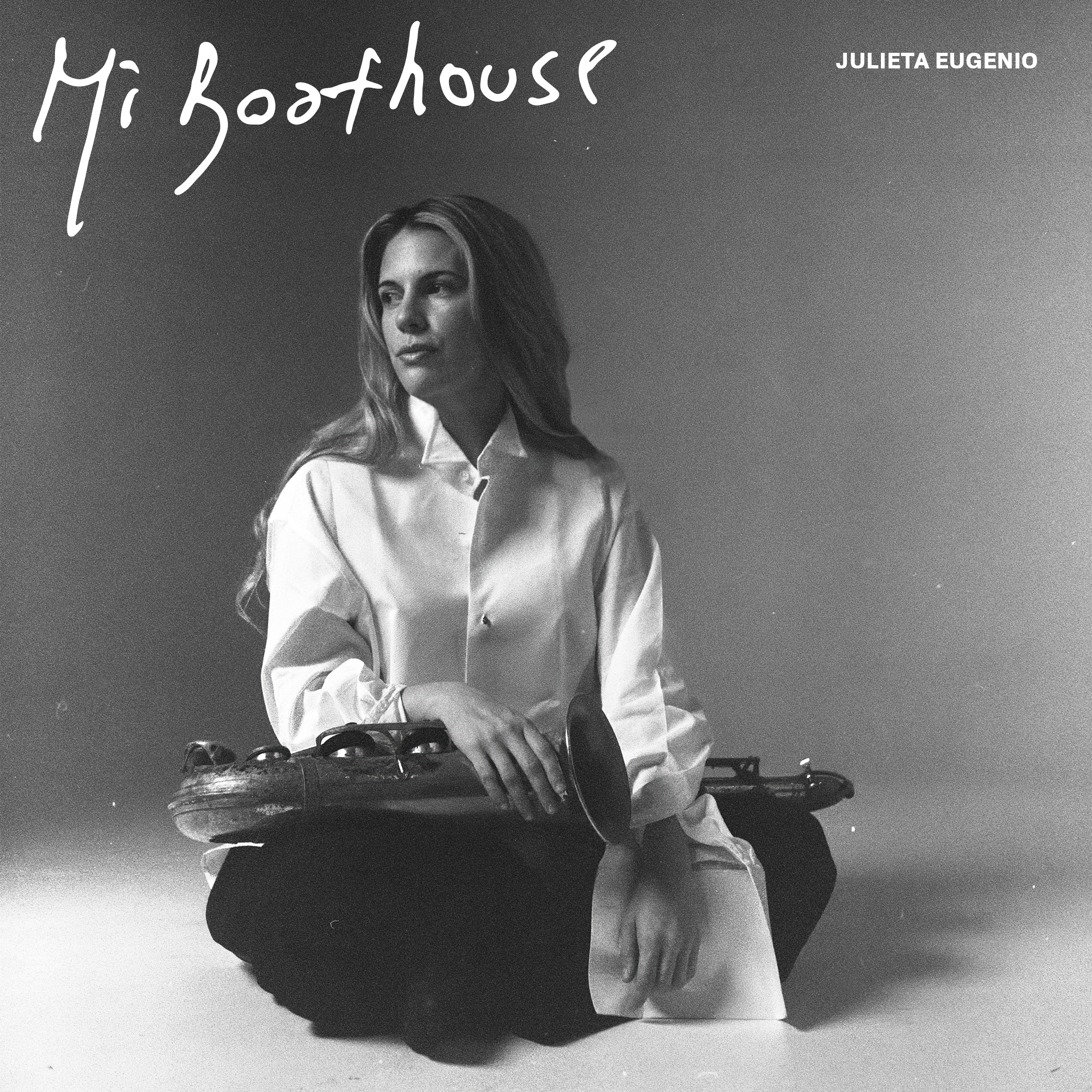
Mi Boathouse, the new album by Argentina-born, New York-based tenor saxophonist, composer and bandleader Julieta Eugenio, will be released October 2 on Dox Records.
Produced by Eugenio and recorded at Second Take Sound Studios in Manhattan, the album features Eugenio on tenor saxophone and pedals, Matt Dwonszyk on bass, Jonathan Barber on drums and Glenn Zaleski on piano. The program includes nine Eugenio originals and closes with Otis Rene’s “I’m Lost.”
A poem written by Eugenio for the project reads : “a boathouse made of feelings, experiences, many stories, my story,”. Each of her song titles here is a piece of that imagery: trees, breath, wind, bees, healing and time.
“The album speaks to the process of finding a space of peace within myself and within this world,” Eugenio says. “When the chaos of the world becomes all-consuming, I seek this place — a bubble wrapped in time and space, where music flows in and out, where pain dissolves with nature’s breath, and where a melody can carry me somewhere within this dimension. I call this sacred space Mi Boathouse.”
Eugenio is joined by three profound musical voices on the New York scene. Dwonszyk, a Connecticut-born, New York-based bassist, composer and bandleader, has worked with Eddie Henderson, Steve Davis, George Cables, Harold Mabern and Jazzmeia Horn, and leads his own ensemble, the Dwonztet.
Barber, a drummer, composer and bandleader known for his group Vision Ahead, was named the No. 1 Up-and-Coming Drummer in the 2018 Modern Drummer Readers Poll, and his credits include Pat Metheny, Terence Blanchard, Christian McBride, Erykah Badu and Nicholas Payton.
Zaleski, a Brooklyn-based pianist, composer and bandleader, has worked with Ravi Coltrane, Ari Hoenig, Lage Lund, Ben Van Gelder and Melissa Aldana, and his leader and co-leader albums include Anticipation, Limitless, My Ideal, Fellowship, The Question and Star Dreams.
Eugenio grew up in Argentina, studied at the Manuel de Falla Conservatory for Jazz Performance, moved to New York in 2013 and earned a master’s degree in jazz at Queens College. Since then, she has performed with artists including Johnny O’Neal, Eric Reed, Leo Genovese, Dee Dee Bridgewater, Pasquale Grasso and Bertha Hope, and has appeared at Jazz at Lincoln Center, Dizzy’s, Smalls, the Kennedy Center’s Mary Lou Williams Jazz Festival, the Washington DC Jazz Festival and the Mid-Atlantic Jazz Festival.
Jump, Eugenio’s 2022 Greenleaf Music debut, put her tenor-bass-drums format on record; the Julieta Eugenio Trio won the 2022 DCJazzPrix that same year. Stay, her 2024 follow-up Independent Release, kept Dwonszyk and Barber in place and brought Genovese’s Rhodes into selected pieces.
On Mi Boathouse, Eugenio expands that band with Zaleski. “I started writing more for piano,” she says. “That led me to explore more contrapuntal lines between the instruments, as well as different colors and textures. I also wanted to give the music more space to breathe and develop, and to let it unfold through a wider range of textures.”
Zaleski first entered Eugenio’s orbit during the release cycle for Stay, when she invited him to play the Rhodes pieces at the album-release show. The quartet crystallized from there. “The trio is very tight,” Eugenio says. “We’ve known each other for so long, and it’s been beautiful to hear that musical connection continue to grow. Adding Glenn has been really fun. I felt like he understood the whole concept of space, and of finding each other inside the tune. I always felt very comfortable playing with him, and he connected so well with the trio.”
Eugenio brings in the music, talks through the specifics, then leaves room for the band. “Whenever I bring in new music, I usually talk through the specifics of the tunes and then let them work their own magic on it,” she says. “I have a great deal of trust in each of their musicianship, and I enjoy being surprised by how they interpret and play the music. I’m always open to suggestions and prefer to make it a truly collaborative experience.”
“This is the third album I’ve recorded with the trio,” Eugenio continues. “We’ve been growing together musically and personally for almost a decade. Their creativity continues to amaze me and inspire me throughout the process.”
The album’s three pedal pieces grew from Eugenio’s solo compositional method. “Everything begins with me sitting with my saxophone, taking a deep breath, and letting go,” she says. “I become a vessel, allowing melodies to flow through me and reveal themselves in their own time.” Pedals became a composing tool: creating bass lines, recording them, playing over them, building counterpoint and reharmonizing melodies. “I started playing with melodies and reharmonizing them,” she says. “There was something about it that I loved.”
Across Mi Boathouse, the saxophone melodies carry the listener through what Eugenio calls “an ocean of rising and falling waves,” while the other instruments move around them and find each other along the way.
“Mantra” and “Mi Boathouse” are the album’s suite-like centerpieces. “They both embody the message of this album,” Eugenio says. “They tell stories, navigating the waves, the highs and lows, the moments of separation and reunion, and ultimately surrendering to the rhythm of what is.
“A Talk with the Trees” comes from a walk in Prospect Park. “One day, during a routine walk in my backyard, Prospect Park, I looked up at the sky through a canopy of trees,” Eugenio says. “They moved gently, whispering to me, dancing with the wind. It brought me to a standstill. We began a conversation. I was a tree among them.”
“Just as a boathouse protects a vessel from the elements,” Eugenio explains in the album’s liner notes, “Mi Boathouse protects the self. It’s a place where the soul can rest, heal and prepare for whatever comes next.”
Available here
“A very fine jazz singer.” Iggy Pop – BBC 6 Music
“An extraordinary talent.” Jo Whiley – BBC Radio 2
‘A rare mix of delicacy and boldness. Sheer perfection.’ The Guardian
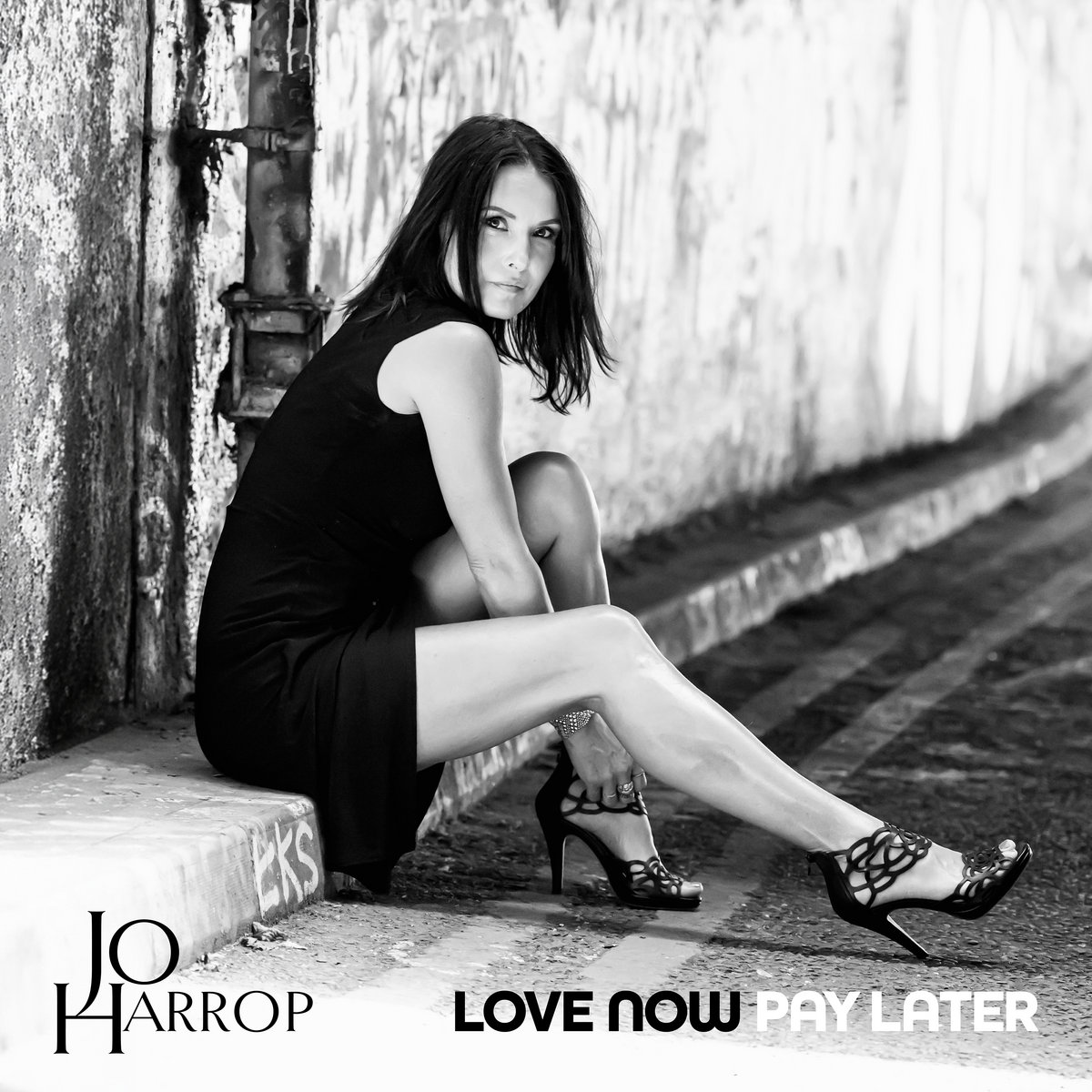
Lateralize Records are proud to announce the release of Love Now Pay Later, Jo Harrop’s much-anticipated fifth studio album, which is due out on 2nd October.
Recorded in the heart of Hollywood at the legendary Sunset Sound Studios, Love Now Pay Later hums with a potent mix of emotional vulnerability and knowing desire. For anyone who sees Jo Harrop solely as a jazz balladeer, this gritty, soulful album will come as quite a surprise.
“Over the last decade I’ve been exploring and refining my sound and my style as an artist,” Jo Harrop explains. “Singing jazz came quite naturally to me, but my love of soul, blues and poetic songwriters such as Leonard Cohen, Tom Waits and Joni Mitchell has also been a huge influence. I’ve always been drawn to the cracks and imperfections, finding the beauty within the darkness, the aching voices and yearning melodies. This album is full of songs that tell a true story.”
The inspiration may have begun with the spirit of Dusty Springfield’s iconic Dusty In Memphis album, but Love Now Pay Later is certainly no exercise in nostalgia. Producer Chris Seefried - known for his work with everyone from Lady Blackbird to Trombone Shorty - has somehow created a sound that feels timeless rather than retro, surrounding Harrop with a band who instinctively understand how to frame her voice.
“The music was recorded in just three days with me fresh off a long-haul flight to Los Angeles between live shows in New York and San Francisco,” she continues. “The musicians were new to me, yet they were incredibly passionate and determined to create something magical. We worked very hard, often recording the vocals late at night to get the most raw and emotional sound and feel.”
“After traveling across borders to handpick a tracklist that tells a true story, Jo Harrop arrived at Sunset Sound elegantly dressed and fuelled by a fierce perfectionism,” recalls Chris Seefried. “She delivered a performance defined by confidence and endurance. Her vocal style is completely unique the moment you hear it, you know it’s her.”
There comes a point in the career of every artist where they face a choice. Continue refining a sound that already works or take a risk and step somewhere unfamiliar. On Love Now Pay Later, Jo Harrop chooses the latter, and the result is one of the most surprising and rewarding albums of her career.
The title track immediately announces that something has changed. Originally recorded by Clydie King in 1969, Love Now, Pay Later bursts from the speakers with confidence and swagger. Harrop then changes the tone with the poignant Love Is Like The Wind, perhaps the album’s most moving song. Smoke Inside A Jar has a seductive, cinematic quality. The song features Soul Queen, Lady Blackbird, whose heavenly voice weaves around Harrop’s beautifully to create one of the album’s most memorable moments.
Her joyful new take on Labi Siffre’s ageless classic, My Song, transforms it into something deeply personal, whilst Larry Banks’ I’m Not The One also provides one of the record’s most heartfelt moments. Harrop has always excelled at interpreting songs that expose uncomfortable truths, and here she captures the painful realisation that a relationship has ended long before either person has acknowledged it.
The emotional centre of the album arrives with I Wanna Love You. Written by Chris Seefried and Billie Eilish collaborator Rozzi Crane, it feels custom-made for Harrop’s voice. Throughout the album, Chris Seefried’s influence is impossible to ignore. The voice remains unmistakably Jo Harrop, but the surroundings have changed. The colours are richer. The grooves run deeper. Harrop has not only expanded her musical horizons but delivered what may well be her finest album to date.
Blending jazz, soul and Americana, Jo Harrop has developed a style that is entirely her own. There is a warmth and honesty to her music that feels increasingly rare, whether she is interpreting a standard or performing one of her own beautifully crafted songs. Every lyric feels lived in. Every phrase feels considered. Nothing is wasted.
Born in the North East of England and now based in London, Harrop released a string of critically acclaimed albums before coming to the attention of a clutch of tastemakers including Jo Whiley and Iggy Pop, who dubbed her “an unimaginably good vocalist.” With the release of Love Now Pay Later, Jo Harrop is ready to embark on an exciting new chapter of her illustrious career.
Former Tok Tok Tok frontwoman TOKUNBO returns with her fourth solo album, Lost & Found, a collection of acoustic songs exploring identity, heritage and the experiences that shape a life. Blending folk, jazz and cinematic pop, the album continues the distinctive songwriting that has earned the German-Nigerian artist international acclaim, including the International Acoustic Music Award for Best Female Artist and performances with the NDR Radiophilharmonie.
Set for release on 25th September 2026 via Yoruba Girl Records, Lost & Found draws on memories spanning three generations, from TOKUNBO's childhood in Nigeria and adolescence in Germany to motherhood and her life as an artist. Written during retreats in a treehouse and by the North Sea, the songs explore family, cultural identity, female empowerment and reconciling past and present.
Looking back, TOKUNBO realised her four solo albums naturally align with the classical elements. If Queendom Come represents fire, The Swan air and Golden Days earth, Lost & Found became the water album, shaped by movement, memory and constant change.
Musically, Lost & Found blends fingerpicked acoustic guitars, subtle jazz influences and understated orchestration with TOKUNBO's expressive vocals. Longtime collaborators Ulrich Rode, Matthias "Maze" Meusel, Christian Flohr and Anne de Wolff return, while acclaimed engineer Marc Ebermann—whose mentors include Al Schmitt and Michael Brauer—handled the mix. Recorded at Hamburg's BluHouse Studio, the album combines handcrafted acoustic arrangements with cinematic textures and rich vocal harmonies. TOKUNBO's previous three solo albums have also become reference recordings within the hi-fi community.
Among its thirteen songs, 70s Magazine Memory imagines the first meeting of TOKUNBO's parents, while True DNA examines the barriers still facing women, To Be Alive reflects on responsibility towards future generations, and Empty Nest looks ahead to her child's future. Throughout the album, personal experiences become reflections on belonging, resilience and the stories we inherit.
Inspired by Vermeer, Picasso and Frida Kahlo, the artwork symbolises TOKUNBO's Nigerian and German heritage through its contrasting eyes, reinforcing Lost & Found as a unified artistic statement.
With Lost & Found, TOKUNBO continues to refine the "Folk Noir" sound that has become her hallmark—intimate acoustic songwriting shaped by jazz, folk and pop influences, united by a thoughtful approach to storytelling. The result is her most complete exploration yet of identity, family and the places we return to while finding our way forward.
"Anyone closely concerned with contemporary jazz keeps an ear open for Davis’ next move." – Giovanni Russonello, DownBeat
“We’ve been touring steadily for a few years now, and I feel a real clarity about who we are as a trio. I wanted to write music that highlights our strengths—grounded in groove and open enough to explore and engage with my compositional language.”
That’s the way that Grammy Award-winning pianist Kris Davis describes the process of composing for her superb trio featuring bassist Robert Hurst and drummer Johnathan Blake. Since the release of the band’s acclaimed debut, Run the Gauntlet, in 2024, the three have logged countless hours together on the road and on the stage, a luxury that the restlessly investigative pianist has rarely enjoyed with any other ensemble.
What has emerged from those invaluable experiences is a deeply attuned and acutely communicative trio, adept at unearthing revelatory new inspirations as they delve deeper into the music. Hailing a January 2025 concert at the legendary Village Vanguard as the “first jaw-droppingly great performance” of the year, critic Nate Chinen hailed the way that Davis’ “stretchy provocations at the keys met with heavy ballast, but also a shared spirit of adventure” from her bandmates. The trio has garnered widespread accolades, most recently being awarded the 2026 Deutscher Jazz Preis (German Jazz Prize) as “Live Act of the Year International.”
“After playing together so much and getting to know each other musically and otherwise, I’ve come to realize what makes this band shine,” Davis explains. “It's been fun to play the same music night after night and find a way to have a different experience every show. We’re digging deeper all the time, and this trio has become focused on the smaller details within the structure of the pieces. It’s all about those little discoveries and shaping the music together.”
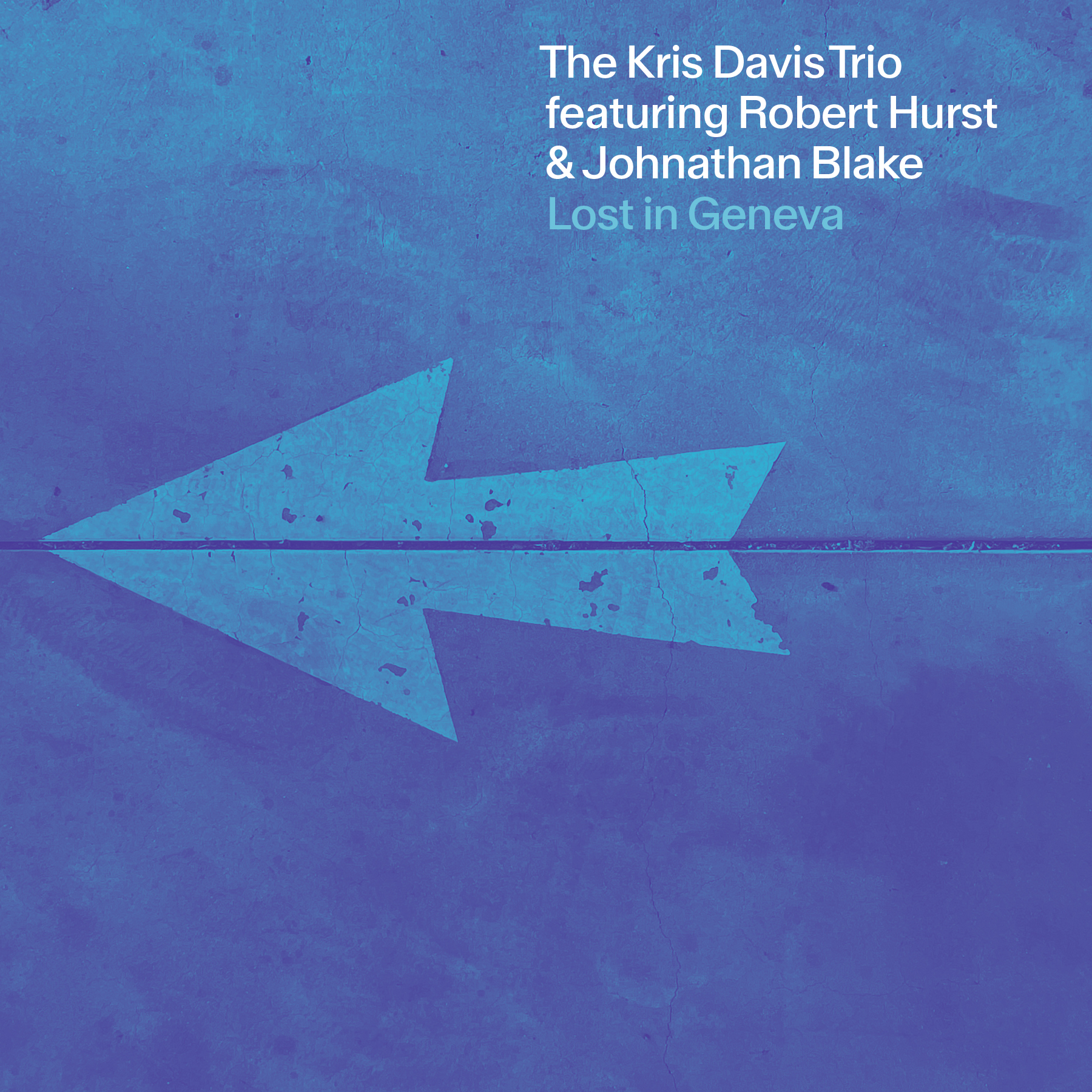
Davis has geared her writing for the trio towards that potential for epiphanies, leading to the band’s luminous second outing, Lost in Geneva. Where its predecessor paid homage to six influential women pianists, the new album draws its inspiration from within, sparked wholly by the dazzling spirit of the trio itself. Hurst and Blake contribute a composition apiece to complement eight new or reimagined Davis originals, along with a thrilling interpretation of a piece by iconoclastic composer Morton Feldman.
The title of the album, out September 25, 2026 on 4166 Records, a new imprint for Davis’ music, is drawn from one of those stories earned through the ordeal of travel mishaps, one facet of the camaraderie forged through touring that may not be evident in a band’s music but inevitably colors the chemistry they share. The namesake tune conjures the fog of temporal and geographical disorientation caused by jet lag and unfamiliar surroundings. Listeners may recognize the piece from the trio’s recent NPR Tiny Desk Concert - itself a moment added into the trio’s collective repository of memories.
Lost in Geneva opens with a jarring blur of piano crosstalk to introduce “The Subtext,” alluding to a different sort of disorientation - the surging, elusive rhythms replicating the secret meanings hidden beneath double-talk. “Congestion Pricing,” introduced by Hurst’s lovely, resonant solo, is likely the first ode to New York City’s recent imposition of tolls on cars entering Lower Manhattan. The music seems to wade into increasingly hectic traffic, from its steady but spacious beginning to the frantic barrage of Davis’ percussive piano and Blake’s thundering drums.
The theme of navigating unknown terrain continues with “Where Does That Tunnel Go,” originally recorded by Davis’ trio with bassist John Hébert and drummer Tom Rainey on her 2010 album Good Citizen. The delicate “The Ballerina” is a composition that Davis has explored in a variety of settings, including in duos with Ingrid Laubrock and Craig Taborn, but has never been captured in its entirety. Both pieces reveal the subtlety with which this trio transmutes even pre-existing material into an expression of their own unique language.
Hurst’s “The Bluesy Bird in Bob’s Backyard” engages with Davis’ long history of taking inspiration from birdsong, echoing the call of a more-soulful-than-usual avian visitor to the bassist’s home. It’s preceded by the group improvisation “Mourning Dove,” one of two spontaneous introductions to Hurst’s piece that grew into their own pieces on the album - the second, “Northern Flicker,” closes the set. Davis’ “The Deer Fly” is a portrait of a less welcome winged creature, a bloodsucking insect known for diving at the heads of New England hikers, evoked by the tune’s relentless momentum.
Blake’s “Clues” was originally recorded on the drummer’s 2012 debut, The Eleventh Hour, rendered here in a propulsive and vigorously grooving form. Davis also zeroed in on the unexpected - and far more abstract - groove of Morton Feldman’s “Nature Piece 5” in her arrangement for the trio, simultaneously rollicking and sharply angular.
Vibrant, exhilarating and riveting, Lost in Geneva is an infectious argument for veering away from the familiar path. Wherever Davis, Hurst and Blake find themselves, they seem sure to discover new depths.
Kris Davis is a Grammy award-winning pianist and composer described by the New York Times as a beacon for “deciding where to hear jazz [in New York] on a given night.” Davis has released 26 recordings as a leader or co-leader and collaborated with artists such as Terri Lyne Carrington, Dave Holland, John Zorn, Craig Taborn, Ingrid Laubrock, Tyshawn Sorey and esperanza spalding. She was named a 2021 Doris Duke Artist alongside Wayne Shorter and Danilo Perez, Pianist of the Year by DownBeat magazine in 2025, 2022 and 2020, and Pianist and Composer of the Year by the Jazz Journalists Association in 2021. In 2019, Davis’ Diatom Ribbons was named jazz album of the year by both the New York Times and the NPR Music Jazz Critics Poll. Her trio with Robert Hurst and Johnathan Blake was awarded the 2026 Deutscher Jazz Preis (German Jazz Prize) as “Live Act of the Year International.” Davis is the Associate Program Director of Creative Development at the Berklee Institute of Jazz and Gender Justice, the founder of Pyroclastic Records and co-founder of the International Creators and Collaborators Workshop. Davis is a Steinway Artist.
Available September 18, 2026 via Rewound Echoes, album includes jazz standards, modern improvisations and nod to British pop
Recognized by audiences and professionals alike as both performers and composers, Isabelle Olivier and Raphaël Olivier form a unique mother-and-son duo. For the past 13 years, their musical worlds have intertwined on a sonic journey they craft through the harp and the guitar. Born from the travels, encounters, and shared moments of the two composers, Open is an ode to openness, an invitation to open our arms, our hearts, to pause for a moment, to breathe and reconnect with what truly matters.
From jazz standards to modern improvisations, with a nod to British pop, this duo invites us into a world of curiosity, camaraderie, and musical innovation. Their two styles—one melancholic, even introspective; the other, playful and adventurous—interact to pique the listener’s curiosity and awaken the senses. You’ll be able to savor Raphaël Olivier’s intimate vocals on two tracks from the album.
Bird in the Forest opens the door to a peaceful world where we wake up to the first rays of sunlight and the song of birds. Our ears and all our senses are captivated by a genuine dialogue between the harp and the electric guitar, particularly in Shapes, this dialogue sometimes takes the form of a chase, as in Looking for Dad, or a playful game of hide-and-seek. Throughout the album, the instruments grow more pensive and melancholic, with tracks like How Many Miles or On the Edge, or even majestically stormy in Yarrow. All Open alternates between rhythmic interplay and unexpected shifts in melody between moments of silence. Following the thread of jazz, we pass through folk with Woman Farmer and swing in Bread Blues when suddenly, we are captivated by Raphaël’s intimate voice in the covers of No Surprises and Moon River, then by his cello (Yarrow), and we marvel once again at Isabelle’s harp by the time we reach the final track. By the end of the listening experience, something has happened, we are no longer in the same place as when we started, we have traveled.
A jazz musician and harpist with a strong musical presence, Isabelle Olivier brings a breath of fresh air and innovation to the international scene by showcasing an instrument as surprising as it is unique. She has developed a highly recognizable style, identifiable from the very first notes of her fascinating and rare instrument. She has composed, arranged, and recorded 13 albums and toured in 25 countries. A composer at the crossroads of jazz, Celtic music, and contemporary styles, she is also in high demand in the fields of film and live performance. She has composed the music for 11 films, including four by Agnès Varda. A recipient of the Villa Albertine award, she traveled to Washington to create a film-concert tribute to female filmmakers from racial minorities. She has had the opportunity to collaborate with exceptional figures such as Peter Erskine, Didier Lockwood, Ernie Adams, Mitch Haupers, and Paul Wertico.
Raphaël Olivier is a composer, producer, guitarist, and songwriter. His catalog of over 300 tracks has accumulated more than 2 billion views and 15 million streams worldwide. Born in Paris into a family of musicians, he began playing the cello at age three and performed professionally as early as age eight in classical ensembles in Italy (Turin Festival), England (Trinity College London), and France (Lyon Auditorium). Trained in both Europe and the United States, he performed regularly at the Lycée Français de Chicago (Art Institute, Lincoln Hall, Symphony Center), then studied jazz and film music at the Conservatoire National Supérieur de Paris. There, he recorded his first project at Studio Davout and embarked on a European tour (Philharmonie de Paris, Botanique de Bruxelles) with artists including Étienne Daho, Yael Naim, and the Orchestre National de Jazz. Based between Paris and Los Angeles, he collaborates on numerous musical and literary projects. His first novel, La Mélodie d’Oklahoma (winner of the Paris FoRTE Prize), will be published in 2026 and will be adapted into a oneman show blending readings and music. Following a residency at the Rinzai-Ji Zen temple, in the footsteps of Leonard Cohen, his work explores the connection between monastic introspection and musical storytelling.
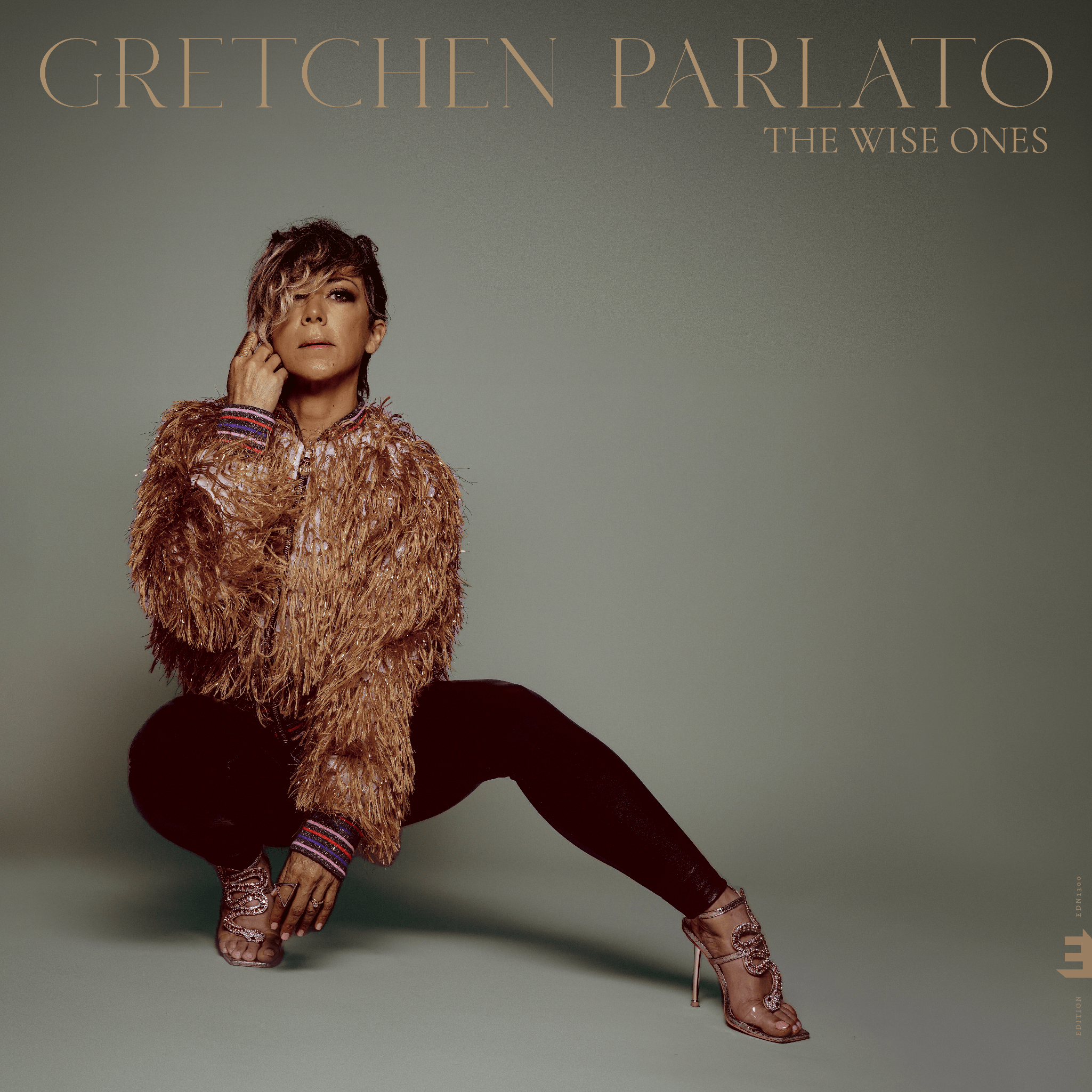
As the 2010s dawned, acclaimed singer and composer Gretchen Parlato released a pair of albums that redefined the possibilities of vocal jazz in the post-millennium era. In a Dream (2009) and The Lost and Found(2011) didn’t merely expand the genre—they reshaped its contours, setting a new creative standard that continues to reverberate today. Now, with her eagerly anticipated new album The Wise Ones, Parlato returns to those formative roots, revisiting their kaleidoscopic beauty through a contemporary lens shaped by time, experience, and transformation.
More than a decade of profound personal, artistic, and global change has passed since those recordings, and The Wise Ones reflects both continuity and evolution. The album draws nourishment from the same soil that sustained her early work while allowing new branches to grow—reaching outward with deeper emotional resonance, refined perspective, and renewed curiosity. Reuniting with many of the trailblazing musicians who helped bring that original vision to life, Parlato revisits a sound that was once boldly new and now feels timeless, enriched by everything that has unfolded since.
With those landmark early albums, Parlato forged a singular voice that honored the deep tradition of jazz while fearlessly advancing it—infused with luminous elements of R&B, soul, pop, West African, and Brazilian music. Her originality was immediately recognized, marking her as an artist not only fluent in the language of jazz, but capable of expanding it. That distinctive musical vocabulary continued to grow on 2013’s Grammy-nominated Live in NYC, followed by Flor(2021), a Brazilian-tinged release met with rapturous acclaim and earning her a second Grammy nomination. Her most recent album, Lean In (2023), brought a third nomination, celebrating two decades of creative partnership with Benin-born guitarist and vocalist Lionel Loueke.
While each successive release revealed new dimensions of Parlato’s wide-ranging vision, the foundational sound she pioneered fifteen years earlier never stood still—it matured, deepened, and evolved alongside her collaborators. At the same time, the early promise of In a Dream and The Lost and Foundwas fully realized as those albums went on to profoundly influence a new generation of creative musicians. The Wise Ones inhabits that lineage with grace, luxuriating in the beauty of its origins while extending the canopy—adding fresh emotional layers, lived-in wisdom, and a quietly powerful sense of arrival.
Scheduled for release September 11, 2026, via Edition Records, The Wise Ones reunites Gretchen Parlato with a core circle of collaborators from her earliest recordings, alongside fellow travelers from across her remarkable artistic journey. Robert Glasper, Gerald Clayton, and Mark Guiliana—each now firmly established among the most influential artists of their generation—return to the table, meeting Parlato on a shared plane, shaped by time, trust, and shared history.
“I’m so grateful to have formed such profound bonds with the musicians on this album,” Parlato shares with a smile. “Beyond the artistry, we’re friends—humans on a deeply connected path. Creating this album felt almost effortless… almost. Of course, it required immense thought and care, fueled by love, admiration, and respect.”
Singer, multi-instrumentalist, and songwriter Alan Hampton—who also co-produced the album with Parlato—adds, “These songs were written at very different moments in our lives: some brand new, others nearly twenty years old. Gretchen had a beautiful vision of weaving them into one cohesive work—exploring time, love, loss, and personal growth, while honoring the shared history that connects us all.”
That sense of family extends to a powerful group of special guests, including vocalists Becca Stevens and Moonchild’s Amber Navran, both of whom cite Parlato as a formative influence. “Gretchen has had a huge impact on my artistry and musicianship,” Navran says. “In a Dream and The Lost and Found came out while I was in college, and we would sit together and listen to those records front to back, fully taking in every detail.” Stevens echoes the sentiment: “If you encounter a contemporary, jazz-adjacent vocalist—myself included—they’re influenced by Gretchen Parlato, whether they realize it or not. She raised the bar into entirely new stratospheres, especially through her deeply authentic reimagining and a vocal sound that could only begin with her.”
Stevens joins Parlato and Hampton on a haunting reinterpretation of Tears for Fears’ 1982 classic “Mad World,” transformed here into a devastating reflection of our times. What begins as a stark, mantra-like repetition slowly unfolds through layered vocals and the shimmering resonance of West African kora. Stevens and Parlato first crossed paths during their New York City years—mutual admirers whose creative connection eventually grew through shared collaborator and longtime friend Taylor Eigsti.
Though Parlato’s collaboration with Amber Navran is a first, their chemistry feels immediate and assured. Their co-written song blossomed into the album’s title track, “The Wise Ones”—not a declaration, but a question. The song reflects a process of becoming, a theme made explicit in Parlato’s lyrics.
“Having recently turned 50, I feel like I may be right in the middle of my lifetime— balanced between my younger self and my future elder,” Parlato reflects. “I try to stay grateful and present, without clinging or drifting too far ahead. There’s a necessary acceptance in honoring every version of who we were, are, and will become. Everything changes. Everything transforms. I wrote the first line of the song as a reminder to myself: someday this will be long ago. That phrase instantly shifts me into gratitude and presence. It opens my heart.”
Continuing the album’s expanding web of connection is guest singer-songwriter and producer Josh Mease, a longtime friend and collaborator. Mease attended Houston’s High School for the Performing and Visual Arts alongside Glasper and Hampton, before all three continued their studies at The New School in New York City. Introduced to Parlato in 2004, Mease contributes two compositions to the album: “Landslide” and “In My Bed,” the latter revived from a demo Parlato first heard in 2005, recorded by Mease and Glasper during their student years—another thread lovingly pulled forward through time.
The moment the opening track, “Capricorn,” emerges, the listener is gently pulled into a world of return and rebirth—soulful, hushed, and luminous. Composed by Alan Hampton with lyrics co-written by saxophonist Matt Parker, the song immediately spotlights Hampton’s gift for atmosphere and emotional economy. Jacob Mann’s shimmering synth textures and Gerald Clayton’s introspective soloing deepen the sense of awakening, setting the tone for what unfolds.
Throughout The Wise Ones, the duets between Hampton and Parlato form a subtle emotional spine. Bandmates and creative partners for more than twenty years, their voices move together with an ease that only long familiarity allows—intertwining, yielding, and lifting one another in ways that feel instinctive rather than arranged. There is a shared breath to their singing, a tenderness that reveals how deeply their musical languages have grown side by side.
That intimacy returns later in another Hampton original, “It’s You,” where his songwriting again takes center stage. Draped in a soft, enveloping bed of sound, the lyrics ache and spiral around the residue of past love, carried by the blend of their voices—warm, vulnerable, and quietly devastating. In moments like these, The Wise Ones makes a compelling case for Hampton not only as a trusted collaborator, but as a songwriter of rare emotional clarity—one whose voice, at last, is being heard in full.
Meeting in the New York City jazz scene in 2004, Robert Glasper was one of Parlato’s earliest collaborators, contributing his most memorable arrangement of SWV’s “Weak” and composing the title track, “In a Dream”, to which Parlato added the lyric. Their partnership deepened with their arrangement of Simply Red’s “Holding Back the Years” and Bill Evans’ “Blue In Green” for Parlato’s follow up CD, The Lost and Found, which he co-produced before rising to the peak of the Jazz and R&B worlds.
“Gretchen Parlato is easily one of my favorite singers to collaborate with,” shares Glasper. “She understands, honors, and respects all the genres of music she touches. She’s not singing at it, she’s singing in it. It’s a rare thing to be able to cross over and get the attention of people in R&B music. That’s not something you really learn, that’s a gift that is given to you. Gretchen definitely has that gift.”
When Parlato invited him to reconnect for The Wise Ones, Glasper responded with unmistakable enthusiasm, appearing on more than half of the album. Together, they cowrote the luminous “Rainbow,” a song that uses imagery from the natural world to reflect emotional states—acknowledging the present moment, the inevitability of change, and offering a radiant expression of gratitude and pride. Another collaboration, “Block the Sun,” is a meditation on creative flow and interconnectedness: a reminder to step out of one’s own way and allow shared creative energy to move freely, without obstruction.
“I was so happy to create with Rob again - it was a perfect example of what has become a theme and feeling of the album. There was a tacit understanding of trust, ease, and adoration between every single person in the room. We were able to turn the essence of an idea into something significant and bring fully composed music to fruition. It’s a beautiful gift to experience humans creating solely for the sake of art and connection. No ego, no motive, just undivided attention in making music.”
The album also revives Stevie Wonder’s “If It’s Magic,” featuring a simmering Glasper arrangement that the pair performed only once years ago, but never recorded. Its inclusion feels like a long-overdue moment—both a nod to their shared history and a striking continuation of Parlato’s signature reimagining, shaped by Glasper’s now unmistakable and instantly recognizable sound.
Navran and her Moonchild bandmate Max Bryk co-wrote “Already Gone” with Parlato, building on Bryk’s initial track. “Max and Amber provided an incredible harmonic groove for me to write a melody and lyric. As the song took shape, I found it necessary for me to make the lyrical statement about acceptance of relationships, circumstance and the parallel process of moving on. Someone’s absence can feel final, though we may still hang on or be affected very deeply. It’s a song of empowerment and letting go.”
Mark Guiliana—one of the most inventive and influential drummers of his generation— serves as the connective thread woven through every track on the album. A beloved and fearless re-imaginer of his instrument, Guiliana brings a rhythmic language that is at once grounded, elastic, and serenely radical. As with Alan Hampton, Guiliana has been a featured presence on Parlato’s past recordings and touring projects, but The Wise Ones marks the first time his contribution extends to the album’s core foundation. Here, his playing does more than support the music—it helps shape its architecture, guiding the sound, feel, and forward momentum of the entire project. His sensibility anchors the album with subtle authority, allowing space, texture, and groove to coexist with striking emotional clarity. “I’ve been a fan of Gretchen‘s music since before we even met and I have been lucky to see her evolution up close.” confesses Mark. “This album is undoubtedly her most personal and strongest statement yet. She somehow managed to look back and collect experiences and collaborators from the past and make a statement that feels very present while vividly looking forward.”
Regarded as a mentor and visionary, Meshell Ndegeocello has deep roots intertwined to the group, adding her voice and bass to “Never Come Down” written by Parlato, Guiliana, and Hampton. Guiliana met Ndegeocello in 2007 and began touring with her in 2008. She later co-produced his debut album, A Form of Truth. After hearing Hampton during a soundcheck for Arte TV in Paris, the legendary bassist - along with Pino Palladino -joined Gretchen’s quartet on stage for their final song. Parlato was introduced to Meshell through both musicians in 2009. “I was starstruck, flashing back to seeing her perform at The Roxy in Los Angeles in the 90’s. She’s legendary, yet she couldn’t be humbler and more inspiring. Meshell is pure magic and soul and simply being in her presence is a true masterclass. Whether I am listening, or on the rare occasions I’ve been lucky enough to sing with her, I get chills. My whole body feels calm and warm - like I’m both grounded and floating at the same time. We have endless gratitude for her artistry and energy on this track.”
“Never Come Down” builds upon Guiliana’s layered percussion, with lyrics that reflect an inner dialogue - balancing between motivation and discipline pushing back against fear and hopelessness. The track underscores the album theme of seeking balance and maintaining middle ground. That sense of steadiness is exemplified by a continuous three note bass line, expressed with the soulful nuance and singular touch that only Ndegeocello can bring.
In this way, The Wise Onesfeels both like a homecoming and a threshold. It is an album shaped by patience, trust, and a deep listening to time itself—one that honors the roots of Gretchen Parlato’s artistic voice while allowing new branches to reach outward with clarity and grace. “I have always been patient with my creativity, allowing the wave to come in due time,” Parlato reflects. “Looking back, I realize that everything has led to this. This moment used to be my future and will someday be my past. So, I want to hold it, suspend it, and make art of it.” With The Wise Ones, she does exactly that— capturing a rare moment of balance between reflection and possibility. The album stands as a pinnacle of decades of connection and growth, while opening the door to what comes next: “This album is a culmination,” she adds, “and also just the beginning of my next chapter.”