Marta Sánchez - For The Space You Left
17th April 2026
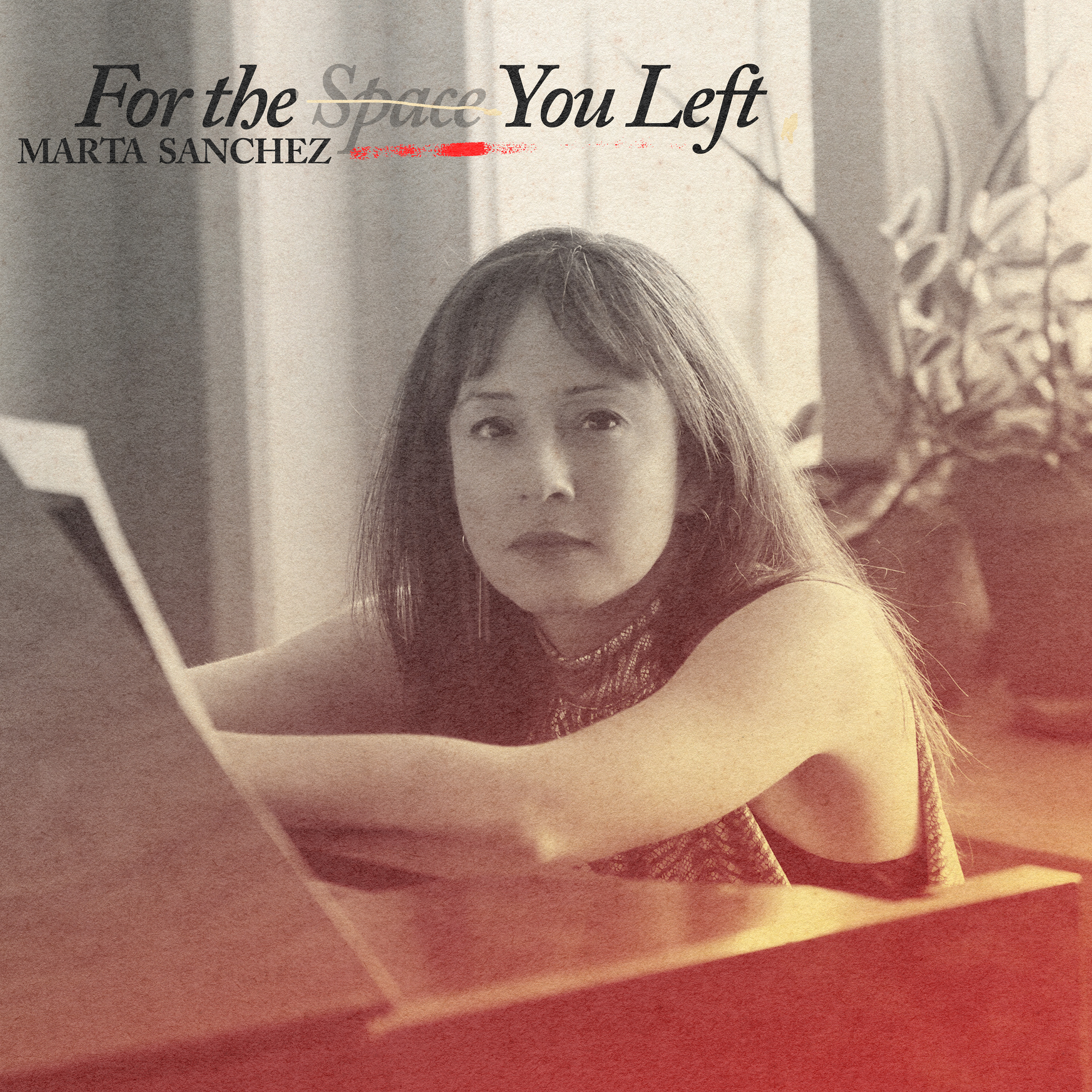
Marta Sánchez - For The Space You Left Released April 17, 2026 on Out Of Your Head Records
“Ms. Sánchez’s music is accessible and lovely, yet built on stark contrasts. One rhythm rubs against another. Multiple melodies coexist. Gentle passages get interrupted by sudden crashes” –Wall Street Journal
“The music Marta Sanchez writes gets intricate, but she also gets memorable effects using simple means.” –NPR Fresh Air
For The Space You Left the debut solo piano recording by Marta Sánchez, will be released on April 17, 2026 (LP/CD/digital) on Out Of Your Head Records. Sánchez is well known in the jazz and improvised music world, both for her albums as a leader (notably Perpetual Void from 2024 and SAAM (Spanish American Art Museum) from 2022), and for her work as an in demand sidewoman, as a regular member of David Murray’s Quartet and the Webber/Morris Big Band, among many others. She demands attention in any ensemble setting, her solos combining flowing narrative lines with uninhibited rhythmic bursts that are simultaneously surprising and engaging. While she is completely at home as a part of any band, a solo piano statement was an obstacle that long seemed out of reach. It wasn’t until she began experimenting with piano preparation in 2017 that she found her own voice in such an exposed setting, and For The Space You Left is the result of years of exploration and experimentation. In these nine pieces she has successfully distilled the signature compositional elements she utilizes for quintet and trio into a single instrument, and through entrancing rhythmic loops and melodic counterpoint has created something uniquely her own. Simply put For The Space You Left is a brilliant solo debut, and should add Sánchez to the conversation of monumental modern solo piano contributions alongside Craig Taborn and Matt Mitchell.
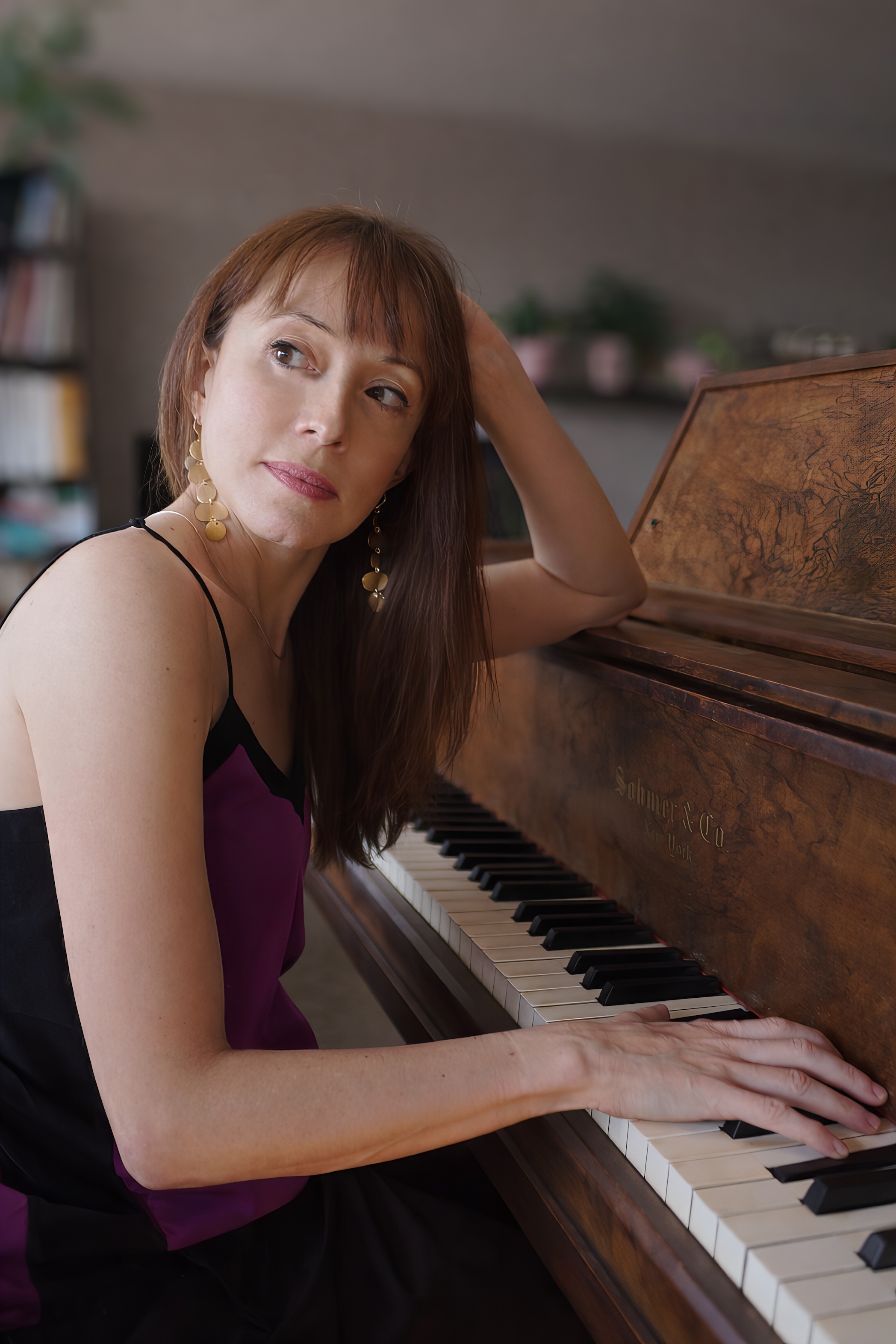
Marta Sánchez on the development of her solo piano work:
“This solo prepared piano record grew out of periods of isolation and solitude, shaped by two very different emotional landscapes. The music began in 2017 during a residency at MacDowell, where I applied with the intention of experimenting with piano preparation and confronting a long-standing fear: playing solo piano. I had always been uncomfortable exposing myself alone at the instrument, and creating a solo project felt like the most direct way to face that fear — and grow through it. At the time, I was interested in translating my compositional language — built around layers, interlocking rhythms, and counterpoint — into a single timbre. Preparation became the solution: by altering the piano’s sound, I could create multiple internal voices, transforming one instrument into a small ecosystem of contrasting textures. MacDowell was an intense and solitary experience. I lived alone in a remote cabin, surrounded by woods and snowstorms, often spending entire days without seeing anyone. That isolation, combined with a sense of vulnerability and self-doubt, deeply informed the music written there. The pieces from that period carry a quiet melancholy, fragility, and a raw openness.”
“After the residency, I became absorbed in writing for other projects — ensemble music, quintet work — and the solo pieces remained unfinished. It wasn’t until the beginning of the pandemic that this music truly resumed. In those first weeks of lockdown, I texted a close friend suggesting that this was the moment to finally focus on our solo projects. We challenged each other to write one piece a week, keeping one another accountable and creatively energized during an uncertain time. Once again, I was writing in isolation, but the emotional context had shifted: the music composed during this period reflects a more intense inner world, shaped by loss, love, uncertainty, and existential questions. If the MacDowell pieces emerge from loneliness and lack of confidence, the pandemic pieces come from emotional saturation — obsessive cycles, abstraction, and a heightened interior life. Together, the album traces two forms of solitude, processed through different emotional lenses. During the early stages, each piece was written with a highly specific and complex piano preparation. However, after performing the music live for the first time, it became clear that changing preparations between pieces was impractical, often requiring long pauses. In response, I re-imagined the setup and arrived at a simpler, flexible preparation that could serve most of the repertoire with only minimal adjustments. Out of respect for the instruments and the concerns of venues, all preparations use gentle, non-invasive materials such as paper, Blu-Tack, and tape.”
For The Space You Left track-by-track overview by Marta Sánchez:
Frost Bloom: Written during the MacDowell residency, Frost Bloom reflects both the physical environment and my musical influences at the time. I was listening extensively to African music — particularly marimba-based traditions and vocal polyphony — and those rhythmic sensibilities naturally found their way into the piece. The composition features a clear three-against-two relationship, with a grounding bass melody supporting interlocking rhythmic layers above. There is a sense of emergence and persistence, mirroring the quiet resilience required to create in isolation. (At MacDowell, the first week was intensely productive, until my computer fell and the hard drive was lost. Having to start over reshaped the music — stress, loss, and renewal subtly embedded themselves into the process.)
Inward Loop: Composed during the pandemic, this piece marks a shift toward abstraction and obsession. A constant rhythmic figure runs through the entire piece, evolving harmonically while remaining structurally fixed. Around it, bass and high-register lines appear and disappear, forming a fragile melodic dialogue. Electronic music was a strong influence here — particularly the idea that subtle changes within repetition can generate tension and emotional movement. The piece reflects an inward spiral: focused, restrained, and emotionally charged.
Snowing in the Woods: Written at MacDowell, this piece is a direct reflection of the environment: long snowstorms, silence, and the stillness of being alone in a small cabin. The music is sparse, melancholic, and restrained, allowing space and resonance to speak as much as the notes themselves.
Estalagtita: A percussive piece composed in 2017, Estalagtita is driven by sharply defined layers: a rhythmic middle voice, a bass foundation, and a fragmented melodic line above. The preparation emphasizes attack and decay, creating a harsh, almost brittle sound world. The piece was inspired by the striking natural formations I encountered during the residency — irregular, raw, and imposing.
Espejos: Written during the pandemic and performed without preparation, Espejos draws more openly from classical piano language. Arpeggios, polyrhythms, and contrasts between reflection and distortion shape the piece, which explores symmetry and fragmentation through touch rather than timbral alteration.
Echolord: Another pandemic-era composition, Echolord continues the exploration of electronic-music aesthetics within an acoustic context. Sustained rhythmic ideas coexist with sudden registral shifts, echoes, and interruptions. The piece plays with perception — what feels stable versus what feels fleeting — creating a sense of spatial depth within the piano.
The Regret: Performed without preparation, The Regret explores contrast not through abrupt shifts, but through unexpected resolutions. The music often moves toward moments of beauty, only to introduce a note that feels rough or “ugly,” subtly destabilizing the harmony. Rather than negating the beauty, this tension deepens it — allowing the resolution to feel more human, fragile, and real. The piece reflects a way of understanding life itself: beauty does not exist in isolation, but gains meaning through imperfection, discomfort, and contrast. Steadiness and unease coexist, shaping one another rather than competing.
Pygmora: Composed during the pandemic, Pygmora returns to African rhythmic influence, particularly marimba-based traditions. Built on a 12/8 subdivision and pentatonic material, the piece is less abstract than other pandemic works, grounding itself in pulse and repetition. The preparation transforms the piano into a resonant, percussive instrument with a strong sense of forward motion.
One for Blake: The final piece is dedicated to Blake, a longtime MacDowell staff member whose presence left a lasting impression. Blake would pick artists up from the station, already offering insight into the rhythms and energies of the woods — how it takes time to attune oneself to the place before the music can emerge. He delivered lunch baskets to the cabins every day, always radiating warmth and care. His stories, generosity, and grounding presence created a deep sense of safety and belonging. This piece is a quiet tribute to that human connection.
Born and raised in Madrid, Spain, pianist and composer Marta Sánchez is actively working in the contemporary creative music scene in New York City and around the globe. Charting a significant path through her innovative and original music, she has reached an international audience and earned broad critical recognition. Marta’s main project, her quintet, was created soon after she moved to New York, and since then she has released four acclaimed albums: Partenika (2015), Danza Imposible (2017), El Rayo de Luz (2019), and SAAM (Spanish American Art Museum) (2022). The American press praised all the albums, including The New York Times, Wall Street Journal, Fresh Air, WBGO, DownBeat, All Music, All About Jazz, and many more. Two of her recordings (Partenika and El Rayo de Luz) were selected by The New York Times as one of the 10 Best Albums of the Year (2015 and 2017). All of her records have appeared on numerous “Best of the Year” lists, including those of Slate, the Jazz Journalists Association, Bandcamp, PopMatters, and others.
In 2024 she released her trio album Perpetual Void on Intakt Records, with Christopher Tordini on bass and Savannah Harris on drums. The album received widespread praise, including 4½ stars in DownBeat. In 2025, Sánchez won the DownBeat Critics Poll in the Rising Star Pianist category, while also placing highly in the Pianist, Composer, Producer, and Album of the Year categories. She has also received prestigious commissions, including one from the Museum of Modern Art (MoMA). She has performed extensively across the United States and Europe at major festivals such as Vitoria-Gasteiz Jazz Festival, Madrid Jazz Festival, Eurojazz (Mexico City and Athens), Jazzaldia, Berlin Jazz Festival, Belgrade Jazz Festival, Winter Jazzfest (NYC), and festivals in Nicaragua and Guatemala. In the U.S., she has led projects at some of the most renowned venues, including Carnegie Hall, Dizzy’s Club, the Village Vanguard, Jazz Gallery, Roulette Intermedium, Smoke, Birdland, Blue Note, 55 Bar, Smalls, The Stone, Mezzrow, and also at institutions like 92NY and the Guggenheim Museum. Her work also extends to film: she received prizes for Best Soundtrack for a short film at the Alcalá de Henares, Curtficcion (Barcelona), and Palma de Mallorca festivals. She has been awarded two residencies at the prestigious MacDowell Colony (2017 and 2021), where she developed prepared piano repertoire. Beyond her work as a leader, Sánchez is an in-demand sidewoman. She tours and records with the David Murray Quartet — appearing on two of his albums, Francesca (Intakt, 2024) and Birdly Serenade (Impulse, 2025). She is also a regular member of groups such as the Oscar Noriega Quartet, the Maria Grand Duo, and the Webber/Morris Big Band, each of which has released an album featuring her. In addition, she has worked as a sidewoman with artists including Sara Serpa, Immanuel Wilkins, Emma Frank, Terri Lyne Carrington and many others. She is also a professor at NYU, where she teaches private jazz piano, ensemble, and piano skills courses for non-pianists.
Marta Sanchez website click here
Thank you to Out Of Your Head Records for sharing