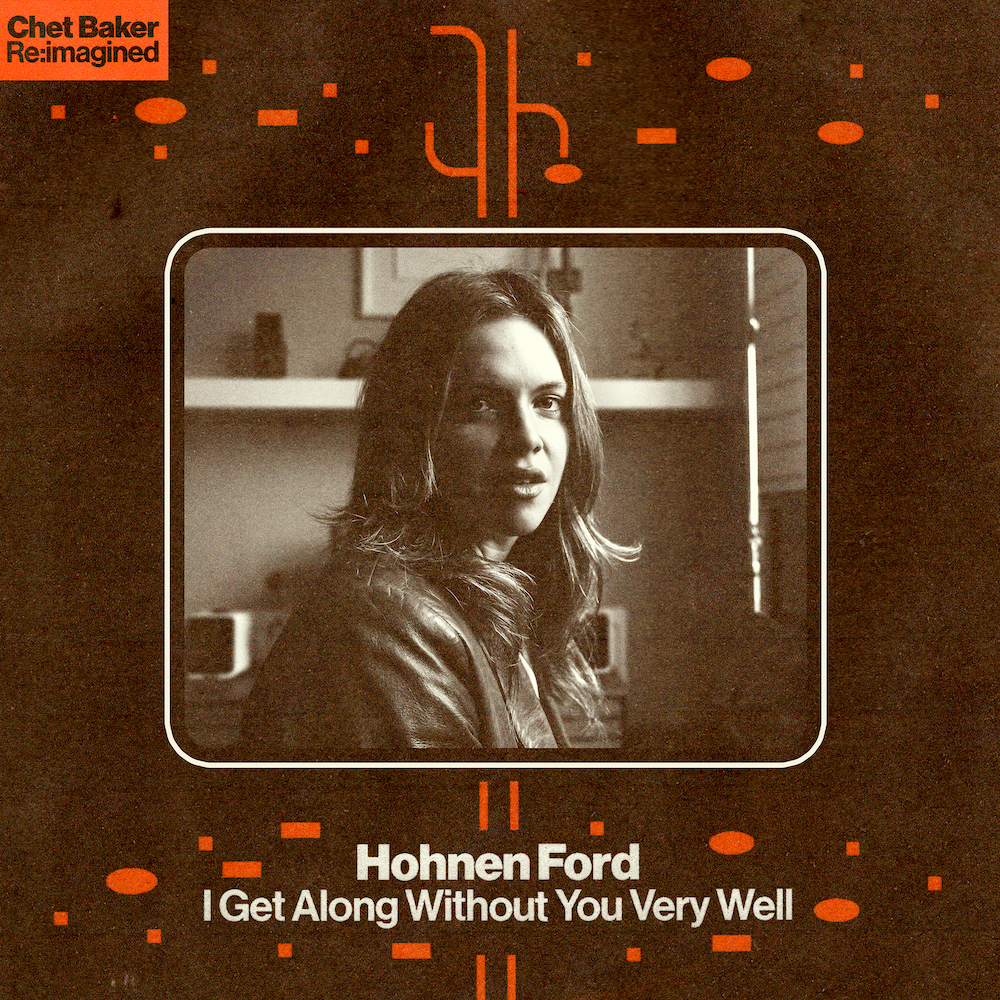
London based singer songwriter Hohnen Ford releases new single from genre-spanning project marking 70 years since the release of seminal jazz album Chet Baker Sings. I Get Along Without You Very Well
“Hohnen Ford conjures a timeless feel in her music, somehow capable of both expressing the universal while grappling with the personal… a potent new voice” CLASH
Chet Baker Re:imagined is released on April 11th 2025. Pre order here
CHET BAKER RE:IMAGINED LINE-UP:
Dodie • Matt Maltese • Hohnen Ford • mxmtoon • Matilda Mann • grentperez • Ife OgunjobiD
Benny Sings • Stacey Ryan • Delaney Bailey • Puma Blue • Sarah Kang • Joel Culpepper • Eloise • Poppy Daniels
Decca Records presents the latest single from the upcoming Chet Baker Re:Imagined collection. Commemorating the 70th anniversary of the legendary album Chet Baker Sings, the project celebrates Baker’s enduring legacy with a selection of reinterpretations of his timeless music through the voices of a new generation of artists.
Following the first wave of single releases from grentperezdodie and Matt Maltese the latest offering is North London based singer-songwriter and pianist Hohnen Ford’s reimagining of “I Get Along Without You Very Well”. Ford’s tender interpretation channels Baker’s own understated style, offering a fresh yet reverent take on the classic track.
Listen to Hohnen Ford – I Get Along Without You Very Well HERE.
“When I first discovered Chet Baker it was quite revolutionary to me. Partly because of how beautiful his tone is and how intimate his interpretations of those songs are. And also just how effortless and melodic his improvisation is. Both his singing and his trumpet playing had a huge impact on me. And because of how much of my life he has accompanied, I think his music will always have a real sense of home to me.
As soon as I was asked to be a part of this project, I immediately knew what song I wanted to do. I Get Along Without You Very Wellis a song that has accompanied heartbreaks in my life. And actually when I went through my first breakup as a teenager, I listened to an unaccompanied version of him singing this song obsessively. Someone had singled out his vocal take and you could hear it unaccompanied. I listened to it over and over again, and cried.”
Chet Baker Re:Imagined features a diverse group of artists from across the world, spanning genres including R&B, pop, soul and jazz. Contributors include UK talents such as dodie, Matt Maltese, Matilda Mann, Joel Culpepper, Ife Ogunjobi, Hohnen Ford, Eloise, Poppy Daniels and Puma Blue, and international stars including Benny Sings (Netherlands), Stacey Ryan (Canada), mxmtoon (USA), Sara Kang (South Korea), and grentperez (Australia/Philippines). These artists explore Baker’s iconic melodies with fresh interpretations, blending acoustic and electronic elements, heartfelt improvisation, and richly layered production.
Chet Baker, a pioneer of the 1950s cool jazz movement, captivated audiences with his virtuosic trumpet playing and delicate vocal style. His seminal album Chet Baker Sings introduced a new dimension to jazz with its introspective and romantic ballads. Building on the success of the Blue Note Re:Imagined series, Chet Baker Re:Imagined connects a new generation of musicians with Baker’s artistry. The album invites listeners to explore the intersections of tradition and innovation, demonstrating Baker’s timeless relevance and the creative possibilities his music continues to inspire.
Chet Baker Re:imagined is released on Decca Records on April 11th 2025.
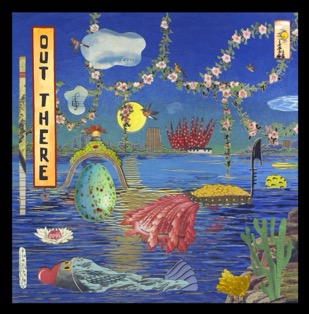
OUT THERE is released on Concord/Telarc on April 4 2025
For over more than 20 years as a recording artist, the pianist and composer Hiromi has shifted seamlessly from one spellbinding project to the next. In the process, she’s earned a reputation as one of the most explosive live performers in jazz history and a global ambassador for the art form. Today Hiromi has announced her 13th studio album OUT THERE (out April 4 / Telarc). OUT THERE is her second album with Sonicwonder, a mighty new quartet featuring Hadrien Feraud on bass, Gene Coye on drums, and Adam O’Farrill on trumpet.
OUT THERE is the follow-up to 2023’s Sonicwonderland, the debut of one of the most expressive and versatile working bands of Hiromi’s career (just watch their NPR Tiny Desk, which rapper Action Bronson deemed “the best Tiny Desk ever”). This new group furthered Hiromi’s distinctive musical alchemy: the spirit of classic jazz-rock fusion melded with classically rooted virtuosity, entrancing funk, pop flourishes, and acoustic jazz. OUT THERE captures their deep chemistry and fearless sense of interplay amid nearly two years of touring and playing together. Hiromi invites you to buckle up, for a fun, thoughtful, and wild musical ride.
Says Hiromi: “On Sonicwonderland, I had the concept and the songs first, and I was looking for the people who could play the music in the ideal way that I had in my mind. Being with this group for well over a year,” she continues, “playing a lot of shows together and understanding each other, I started to see more of their strength and what shines in them the most. So, I started to write music with them in mind.”
Hiromi’s Sonicwonder brings together world-class musicians of diverse backgrounds. French-born Feraud is a fusion virtuoso who has been compared to bass great Jaco Pastorius. Coye hails from Chicago, where he grew up playing in church and combines technical mastery with a soulful knack for groove and pocket. Brooklyn-raised O’Farrill, part of a dynasty that includes his father and grandfather, Latin-jazz titans Arturo and Chico O’Farrill, ranks among his generation's most important and progressive trumpeters. Throughout the album, O’Farrill conjures up audacious new sonic textures through electronics — part of his toolbox that Hiromi encouraged him to develop fully.
“[Bass legend and collaborator] Anthony Jackson always told me that a first-class musician can do anything,” Hiromi says. “You don’t really have to put them in one genre or one category.” Knowing that anything she composed would be met with outstanding performances, Hiromi let her fiercest ambitions run wild when crafting the music on OUT THERE. “It all comes from curiosity,” she explains. “I think curiosity is the key to everything. How can you express yourself more? How can you write more?”
The album begins with “XYZ,” a fresh take on the first song that Hiromi ever released, back in 2003. It’s a delirious burner that evokes the avant-garde-leaning Blue Note titles from the ‘60s. “Yes! Ramen!!” is a tribute to Hiromi’s favourite food over synths, revved-up disco beats, and a menacing riff. The band shares Hiromi’s love for ramen, especially O’Farrill and Coye, and they try to hit as many spots as possible on tour. “For this song, it was more like putting a soundtrack to the film I had in my head,” she says. “When the landscape changes, then different music comes in — different restaurant, different style.”
The core of OUT THERE is its four-part suite, which Hiromi would like fans to hear as a focused front-to-back listen. It opens with the rapid-fire melody of “Takin’ Off” and traverses the sly ’70s fusion grooves of “Strollin’,” which calls to mind Herbie Hancock, George Duke and Grover Washington Jr. “Orion” follows, with bold and triumphant bookends that could score a great work of science fiction. The suite closes with “The Quest,” which unites the chopped-up rhythmic thrust of current jazz with the synth pleasures of vintage prog-rock. The album’s finale is “Balloon Pop,” which is as much of an earworm as anything currently on the Hot 100. And with O’Farrill on trumpet, its hummable theme summons up Miles Davis’ hook-filled ’80s recordings.
Tied to the album’s release, Hiromi’s Sonicwonder will perform concerts at famous venues in Chicago, Toronto, a special album release show at the Blue Note in NYC, and more. See below for the full itinerary. For the artwork, Hiromi has once again tapped the artist Lou Beach, famous for an array of album covers including Blink 182's Dude Ranch and albums by Flying Burrito Brothers, Madonna and Weird Al.
Hiromi’s many career triumphs include an NPR Tiny Desk Concert that has racked up 2 million views; the opportunity to represent her native Japan with a performance at the 2021 Summer Olympics in Tokyo; 2024 winner for Best Music Score for the animated feature film Blue Giant (Award of the Japanese Academy); and a GRAMMY Award for a collaboration with fusion hero Stanley Clarke. Her artistry is — to borrow a descriptor the New Yorker favoured — “dazzling.”
Pianist Satoko Fujii’s Tokyo Trio Make Their First Studio Album
“Satoko Fujii’s Tokyo Trio isn’t even close to being a conventional jazz trio. But it is a Satoko Fujii
ensemble in every sense, with the grace, sophistication, surprise and ingenuity found in every other of her ensembles.” — S. Victor Aaron, Something Else!
“Ms. Fujii's Tokyo Trio has all the requisites for a landmark avant Jazz Improv Trio.” — Grego Applegate Edwards, Gapplegate Music Review
After two previous live recordings, pianist-composer Satoko Fujii’s Tokyo Trio made their third release, Dream a Dream in the studio. The beautifully detailed recording cements their place as one of the leading piano trios of our time. Fujii, bassist Takashi Sugawa, and drummer Ittetsu Takemura have an innate chemistry that allows them to navigate Fujii’s compositions as well as improvise with telepathic unity. It’s an unbeatable combination of individual and collective expression that keeps the music always lively and surprising. The album will be released March 28, 2025 via Libra Records.
Striking the balance between composition and improvisation is key to the magic of the trio’s music. “I know improvised music can be exciting and I might not need to write anything to get good music. But I like writing notes, too,” Fujii says. “I like to have these two things together without borders.
“Sometimes I write a lot, but other times I write just a few bars to set the mood,” she continues. “For instance, ‘Dream a Dream’ has a long theme that is very much written but then we improvise and I use some parts from the theme to cue a change in the feel. ‘Summer Day’ has very few written parts, but I use them as cues to start the next section. I love composing the structure as well.
Solos, duos, and collective sections are very much planned but we always can change them as we listen and play.”
Since they debuted at Tokyo’s legendary jazz club, Pitt Inn, in 2019, the trio has devoted itself to perfecting their collective sound. The music on the new album was recorded in the middle of a 2024 European tour, but they had also worked on the material during an earlier tour of Japan. They honed their approach to Fujii’s compositions until improvisation and composition co-exist “without borders,” as Fujii puts it.
The music is further enriched by the personal approach each member brings to the table. “I always love playing with someone who has their own voice,” Fujii says. “Takashi and Ittetsu are great improvisers, that means they listen deeply and carefully. Meanwhile, they play and improvise in their own unique way.”
It’s a delight to hear how Fujii uses the trio’s many resources to create beauty and surprise in a new approach to a familiar jazz combo format. “Second Step” opens the album with a prime example of the trio’s improvised give and take and the impossible-to-predict course charted by Fujii’s compositions. Fujii’s unaccompanied haunting introduction erupts into waves of crashing notes before she introduces the written theme. But the momentum of the piece is sidetracked by a low, spacious bass solo in which Sugawa etches percussive single notes in silence. A trio improvisation follows, setting up a rapid-fire drum solo that sets up a quirky trio conclusion full of shifting tempos, changing densities, and some of Fujii’s most lyrical and elegant piano playing on the album. It’s quite a journey.
“Dream a Dream” is an exercise in contrasting moods and unexpected twists. Over the course of the piece, Fujii moves from surreal sounds created inside the piano, through a baroque composed melody, tension-filled irregular phrases, to a rhapsodic conclusion. As the piece evolves, she orchestrates the trio into solo and duet combinations that redirect the flow of the music but maintains an off-balance progress. Sagawa’s solo showcases his melodic sense, full tone, and dramatic use of dynamics while Takemura’s speed and precision impress during his solo venture.
The trio’s collective interplay and dynamic balance of diverse voices highlights “Summer Day.” Staccato notes fall like intermittent rain to open “Rain Drop,” then develops in unconventional, almost nonlinear, ways as the music ebbs and flows through various combinations of instruments. The title of the final track, “Aruku,” means “walk” in Japanese and Fujii wrote it during the pandemic to commemorate the walks that she and husband Natsuki Tamura took together each day. It’s a very dynamic piece, with sudden stops, high-contrast changes in direction, and subtle shifts in ensemble balance.
Pianist and composer Satoko Fujii, “an improviser of rumbling intensity and generous restraint” (Giovanni Russonello, New York Times), is one of the most original voices in jazz today. For nearly 30 years, she has created a unique, personal music that spans many genres, blending jazz, contemporary classical, rock, and traditional Japanese music into an innovative synthesis instantly recognizable as hers alone. A composer for ensembles of all sizes and a performer who has appeared around the world, she was the recipient of a 2020 Instant Award in Improvised Music, in recognition of her “artistic intelligence, independence, and integrity.” Frequently cited in the DownBeat Critics’ Poll, in 2024, she ranked high in three categories—piano, big band, and arranger.
In 2022, she released Hyaku, One Hundred Dreams her 100th album as a leader. On the way to this impressive milestone, she has led some of the most consistently creative ensembles in modern improvised music, including a piano trio with Mark Dresser and Jim Black (1997-2009). In addition to a wide variety of small groups, Fujii also performs in a duo with trumpeter Natsuki Tamura, with whom she’s recorded nine albums since 1997. She and Tamura are also one half of the international free- jazz quartet Kaze, which has released seven albums since their debut in 2011. Fujii has established herself as one of the world’s leading composers for large jazz ensembles. Fully a quarter of her albums have been with jazz orchestras, prompting Cadence magazine to call her “the Ellington of free jazz.”
Multifaceted Harpist Ashley Jackson Signs To Decca Records, US Announces Label Debut Album Take Me To The Water - Set For Release On March 21
First Songs Off The Emotionally Stirring Collection “Deep River Pt. 1” and “Deep River Pt. 2”
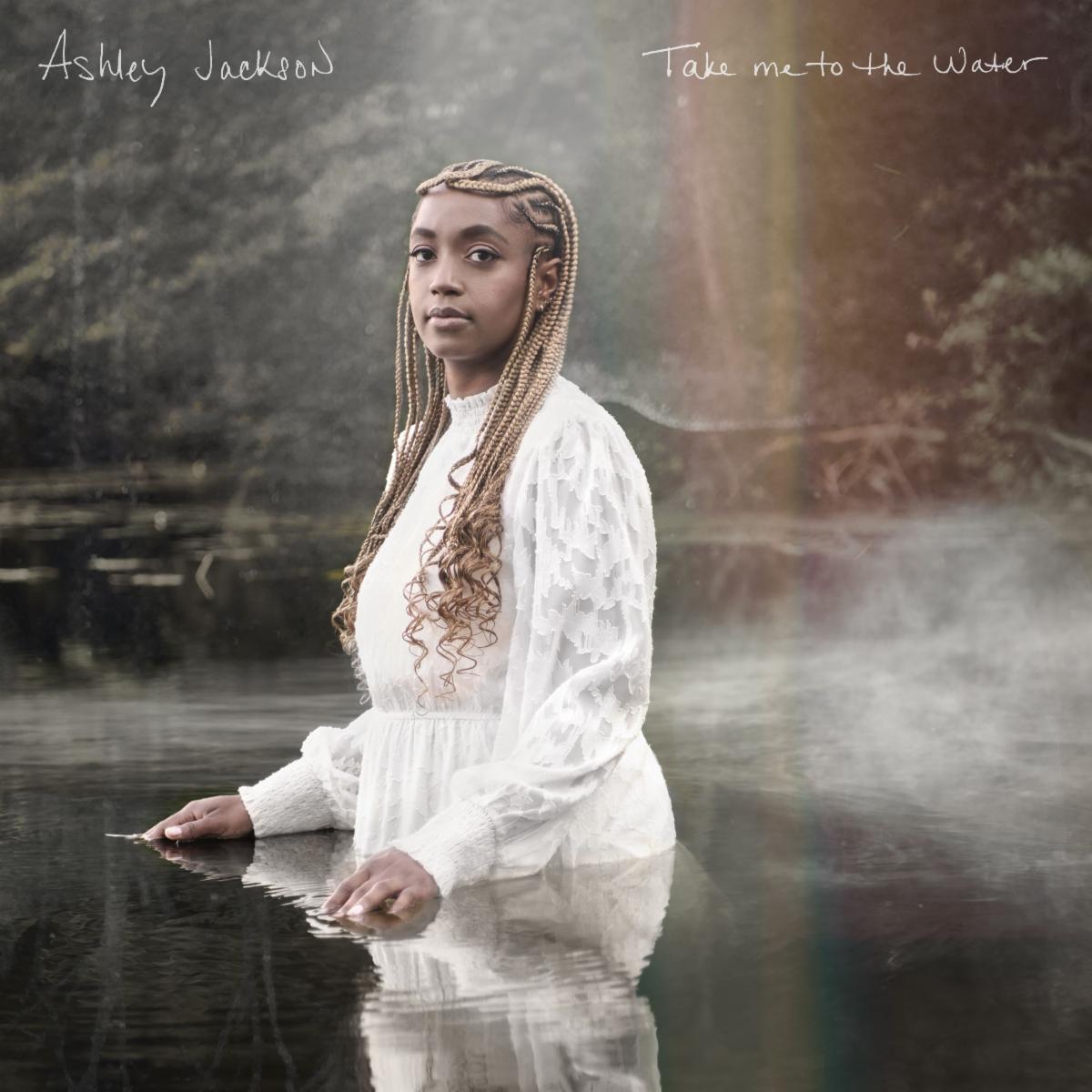
Decca Records, US is honored to announce the signing of award-winning harpist, Ashley Jackson, whose evocative artistry fuses traditional classical music with the rich heritage of Black spirituality. Ashley’s label debut album, Take Me To The Water, will launch globally on March 21, with the first two tracks, “Deep River Pt. 1” and “Deep River Pt. 2” available now across all digital service providers. Pre-order the album and listen to the tracks here.
Take Me to the Water is a masterful exploration of the transformative and spiritual power of water, featuring Jackson’s unique interpretations of iconic works by Margaret Bonds, Alice Coltrane, Claude Debussy, and Samuel Coleridge-Taylor. Through this deeply personal and creative project, Jackson takes listeners on a musical journey that connects cultural heritage, spiritual reflection, and universal themes of renewal and freedom.
“Water is celebrated in lots of different cultures, but, despite that, you find recurring themes in those celebrations,” Jackson shares. “So I wanted to hone in on those ideas—ideals—such as love and rebirth and hope.”
In “Deep River,” originally adapted by composer Samuel Coleridge-Taylor in 1905 - through her harp’s fluid, celestial tones, Jackson breathes new life into this iconic spiritual. “In playing ‘Deep River,’ I’m transported to a place where I can access that kind of cultural memory,” Jackson explains. “Just imagining my ancestors singing that, and what the words would have meant. So as to tell their oppressors that they're singing about one thing, but really, they're communicating something else. Tapping into that ingenuity is so humbling.”
Take Me to the Water not only celebrates music’s ability to connect cultures and histories but also raises awareness of global water inequities, with 2.2 billion people still lacking access to safe water today. This dual focus amplifies Jackson’s belief in music’s power to inspire and heal.
With Take Me to the Water, Ashley Jackson establishes herself as a bold and visionary voice in and beyond classical music, elevating the harp as an instrument of deep emotional resonance and limitless possibilities. The album promises to be a replenishing and immersive experience, creating a sonic experience that is both grounded in history and forward-looking.
Vital and sacred, water is the essence of all life on Earth; an elemental force spiritually intertwined with freedom, transformation, purification, and renewal. For her second album Take Me to the Water, award-winning harpist Ashley Jackson distills her instrument into a fluid sonic language that meditates on these themes and metaphors, drawing from African mythology and the antebellum spiritual tradition while recognizing the 2.2 billion people who are still denied safe access to clean water today.
“Water is something that is celebrated in lots of different cultures, but, despite that, you find recurring themes in those celebrations. So I kind of wanted to hone in on those ideas—ideals, perhaps—such as love and rebirth and hope,” she explains of the follow-up to her 2023 debut Ennanga, which garnered acclaim for its consideration of American music and its roots in Black spirituality. “I really wanted the album to speak to those ideals that we all experience or strive for. And music is a beautiful way to remind us of those things.”
From the start of Take Me to the Water, we are guided towards a place of warmth. Arranged for harp and strings by Jackson, the soul-nourishing opener puts a fresh spin on Alice Coltrane’s 1977 Transcendence standout, “Radhe-Shyam.” Jackson first began digging deeper into Coltrane’s work while she was pregnant with her daughter in 2018, later finding common ground in their experience of motherhood. On “Radhe-Shyam,” she leans into the song’s central messages of love and devotion while introducing her new vantage point, carved from significant personal milestones such as parenthood, which allowed her to re-frame several “seasoned” pieces in a new light.
Accordingly, Debussy’s “Danse Sacrée” has formed part of Jackson’s repertoire since her days as a high school harpist. Here, it is woven into the album’s thoughtful narrative with a chant-like melody in thrall to the West African goddess Yemaya, and by virtue of its influences; Debussy was rumoured to have been inspired by a watercolour painting about water. Adding to these strands, on “Yemaya” (pts 1 & 2), Jackson works like a collagist, applying a “snippet” of a 2020 harp concerto by her colleague João Luiz Rezende to a piece that ushers in another of the album’s throughlines: the honouring of Yemaya, who is celebrated across the diaspora and often depicted as the goddess of the ocean.
Take Me to the Water consistently demonstrates Jackson’s commitment to reinvention. One of the album’s standout moments, “Troubled Water”—based on the baptism spiritual “Wade in the Water”—finds her honoring an iconic piano piece by pioneering Black composer and pianist Margaret Bonds, blazing a trail with her own groundbreaking harp transcription. Awash with deep lows and cascading highs, “Troubled Water” is an expressive and virtuosic creation that deftly mimics the dynamism of water, transposed for the harp using a novel technique which aided the recording process; weaving a pair of socks through the lower strings to dampen the resonance. “I always like the extra sound because that's what makes the harp the harp. But that's what popped into my mind in that recording session. Oh, we can try this to make it clearer,” Jackson explains.
Similarly, Jackson orients her strings to do the talking on “Deep River,” wringing every drop of emotion from every note on a canonical African American spiritual adapted and composed in 1905 by the famed Samuel Coleridge-Taylor. “Deep River” evokes freedom and hope, the words rich with multiple layers of meaning (“Deep river, my home is over Jordan / Deep river, Lord, I want to cross over into campground”) while the song unfolds with a gentle nostalgic melody that gradually crescendos like a rising tide in a storm, rolled chords and arpeggios gushing with celestial energy.
“The way Coleridge-Taylor begins it, I’m transported to a place where I can access that kind of cultural memory. It's very easy for me to close my eyes and imagine, because I wasn't there,” she says of “Deep River.” “But just imagining my ancestors singing that, and what the words would have meant… So many spirituals are encoded with multiple layers of meaning. So as to tell their oppressors that they're singing about one thing, but really they're communicating something else. Tapping into that ingenuity is so humbling.”
Jackson’s harp undeniably wields great solitary power, yet when fleshed out with vocals or percussive flourishes, as heard on the blues-inspired interlude “River Jordan” or transcendent closing track, “Take Me to the Water,” it opens a portal to an intimate new dimension. The backup strings from Jackson’s long-standing collaborators the Harlem Chamber Players—with whom she first began playing a few years after finishing her doctorate at the Juilliard School in 2014— showcase her collaboration while her rendition of the Brandee Younger’s politically potent 2022 track “Unrest” reminds again of her desire to forge connection through music.
Many of Jackson’s earliest musical experiences were shaped by her Nana’s Baptist church in Newark, New Jersey, and she draws on these for Take Me to the Water, most pertinently in the album’s fluctuating emotions and underlying journey towards a higher, holistic state of consciousness. “The continuous seamless weaving of music to take you to those different emotional states is very much part of my concept for the album,” she says, adding: “Because I would love for my audience to be able to stay in something and then to be pulled somewhere else but the music doesn't stop.”
The album finds its triumphant conclusion in “Take Me to the Water” (pts 1 & 2), an open-hearted epic built around heavenly glissandi and soaring voices that carry a profound sense of communion. Thematically, the song embodies a full-circle moment. “It's a theme and variations,” explains Jackson. “‘Take Me to the Water’ very consciously builds in complexity, to sort of evoke that sense of subversion during baptism. And then coming out, feeling ready to walk a new walk.”
These enduring sentiments are at the heart of Ashley Jackson’s new album. Replenishing and immersive, Take Me to the Water embraces the transportive heft of the harp, conjuring a radiant vision of a world anchored by hope and brighter days, thereby imbuing an ancient instrument with vivid new meaning.
Victoria’s music is a mixture of various influences – from the diversity of harmonies and timbres in contemporary jazz and chamber music to the poetry and groove of traditional Bulgarian chants and odd rhythms. The album “Roots &Skies” aims to balance the common and different, the local and global, "me" and "us", East and West, creating a transcultural musical identity that resonates universally. Themes of peace, inclusivity, homesickness, and the joy of travel and encounters form a coherent mosaic.
“A fascinating journey between jazz, chamber music, and Bulgarian folklore... Kirilova understands how to interweave sonic worlds with artistic elegance and expressive strength.” — MICA (Austria)
“She lets the music float elegantly... a gently elegiac tone free of melancholy—rather, what one hears is exhilarating poetry. A surprise, a discovery.” — Der Standard (Austria)
The album’s title reflects Victoria’s vision of connecting her perception of Bulgarian traditional music to the "open space" of different musical impacts, with the aim to reframe these roots as living, dynamic forces within contemporary music.
Each piece tells a story, transporting listeners to exotic cities, vibrant landscapes, and mystical night train journeys. The compositions evoke a sense of magical realism, featuring narratives about rebellious young women, cross-cultural encounters, and the thrill of discovery.
Victoria Kirilova:A double bass player and composer, Victoria is an active musician in the Viennese and European music scene. Her music is a mixture of various influences – from the diversity of harmonies and timbres in contemporary jazz and chamber music to the poetry and groove of traditional Bulgarian chants and odd rhythms.
All I Know is the 4th album from Scottish jazz vocalist and songwriter Louise Dodds. It blends contemporary vocal jazz with Louise’s love of songwriting and storytelling, and uses improvisation to elaborate on the emotion and story of each song.
Originally from Scotland, Louise Dodds was nominated for Best Vocalist at the Scottish Jazz Awards in 2022 and 2023. Louise previously released two critically acclaimed solo albums – Fly (2013) and The Story Needs an Ending (2022) plus the stunning jazz/folk duo album Two Hours After Midnight (2023) with pianist & arranger Elchin Shirinov. She has performed at the EFG London Jazz Festival, Edinburgh Jazz & Blues Festival and Glasgow Jazz Festival and into Europe. In 2020 she opened for Norma Winstone MBE.
The title of the album, All I Know, is a line from track 5, Educating the Heart, chosen as it also sums up the overall theme of the album - everything Louise has come to know about love, life and the people around her.
Each song has been inspired by either a personal experience or the experiences of those closest to her, with a raw honesty intended to help the listener feel a sense of connection and understanding. It touches on both the light and dark sides of these experiences, often within the same song.
‘I wanted to give a voice to these feelings and experiences not just to understand and release them, but to also help other people know that they are not alone in what they are going through, and to help them find what they need within themselves.’
The album covers themes such as friendship in difficult times, the highs and lows of relationships, the love and pain within loss, finding strength and courage in yourself, and even asks the question
- if you could go back in time and meet your younger self, what would you tell them? (Inside Story). The album also includes a homage to her hometown of Edinburgh (Holyrood).