Rina Srabonian joins our photography exhibition at the Manchester jazz Festival
26th April 2026
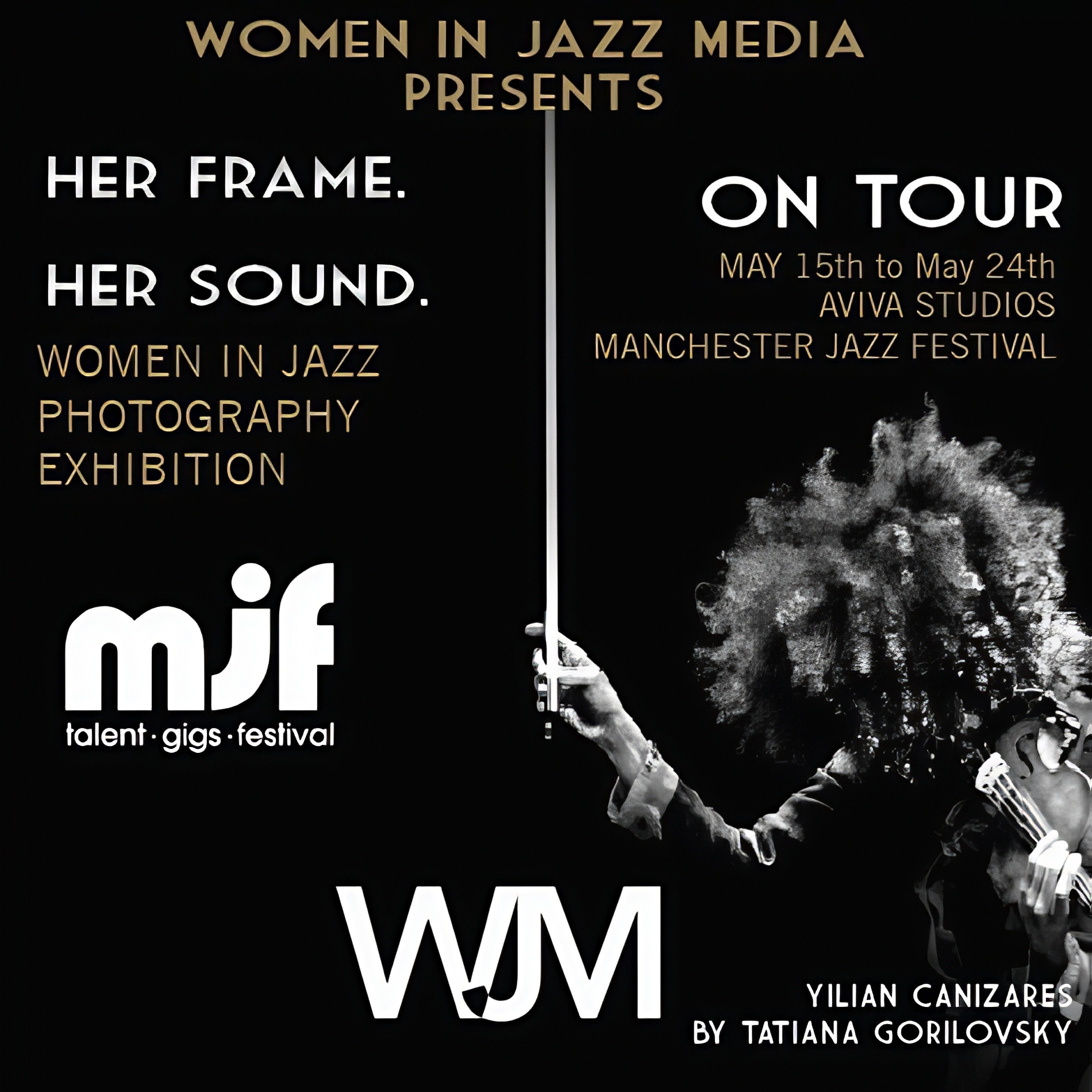
We are thrilled to have the work of Rina Srabonian included in Women in Jazz Photography: Her Frame. Her Sound photography exhibition at the Manchester jazz Festival. Bringing together inspirational women from across the globe, the photography exhibition will be at The Social space at Aviva Studios 15 – 24 May inclusive during the Manchester Jazz Festival.
The exhibition is free, but do book tickets for music events by clicking here
It was wonderful to catch up with Rina and find out more about her work!
Please tell us about your journey into photography:
Photography and music have been part of my life since my childhood. My father was a musician with a strong interest in cine and analogue cameras. I grew up alongside his creative encouragement including piano lessons.
When did you first pick up a camera?
I used a Polaroid camera at 12. I photographed my family, and people around me. The camera was not mine alone, it belonged to my family.
How did you develop your skills as a photographer?
I was introduced to photography during my Foundation in Art and Design course at Manchester Metropolitan University, where I learned the fundamentals, including darkroom film development. We also studied a few photographer’s work. Since then, I have continued to use my camera and build my skills through online courses in digital photography. Life drawing has further sharpened my observational eye, particularly in light, shadow, colour, mood, and form. Over time, I have refined both my eye and my editing style to capture energy, emotion, and atmosphere. Music and performance photography, in particular, have strengthened my technical ability, as constantly changing lighting and movement demand quick decisions and adaptability. Above all, my love of music deeply informs my photography. Holding my camera feels like playing an instrument—an extension of the energy and emotion unfolding on stage.

What drew you to photograph music?
Music has always been central to my life, particularly jazz and flamenco. I have a strong connection to rhythm and percussion. I have studied Nigerian percussion with Tafa Onigbanjo and Tommy Odueso, and Afro-Cuban percussion with La Timbala. We went to Cuba with a study group. There, I became aware of what I call a “depth of feel” in music—an energy and emotional intensity that deeply moved me. This experience shaped how I approach photography: feeling the music, knowing when to respond, and capturing the energy and emotion of performers with admiration and respect.
How does music make you feel?
Music makes me feel humble and human, at times vulnerable and empowered. When listening to music I am able to experience states that other artforms can not transmit or reach. I am especially moved by music that carries sounds of resilience with deep universal qualities. Music as such makes me feel very alive.
Are there any photographers whose work has inspired you? Or any other photographers you would like to mention?
There are many photographers I admire; a few that come to mind are: Salvatore Ferragamo, I admire his level of humanity, sincerity and his poetic compositions. Josef Koudelka’s photographs, especially of Roma communities, capture spontaneity and raw beauty with an edge that feels alive—like jazz or flamenco. Val Wilmer’s close relationships with musicians, which gives a certain depth and intimacy to her work. As one of the few women in a male-dominated field, she also opened doors for others. Chuck Stewart’s portraits of Black American musicians carry dignity, elegance and quiet activism. I especially admire his portrait of Eric Dolphy and his use of light and composition.
What brought you to Manchester?
I came to Manchester to study art and design. I already had a small community of relatives here.
How did you first connect with the Manchester Jazz Festival?
I have attended the Manchester Jazz Festival, (MJF) for many years and seen many strong performances. MJF to me is an important part of the city’s music culture, alongside venues like Band on the Wall and others. A few years ago, I joined the MJF team as a volunteer photographer and have enjoyed being part of its vibrant and welcoming team.
We are thrilled to have your photographs in our exhibition! Can you tell us about the photos you chose and why you chose them?
I chose photographs of women with depth of emotions and a strong presence in their performance. I am drawn to artists who radiate power and authenticity, (power can be loud or quiet). I also wanted to highlight women whose diverse backgrounds enrich their work, and whose openness to their environment adds depth and understanding to their music.
Life as a photographer – any challenges?
One of the main challenges is that photographers are often undervalued in the music industry, both in the UK and Spain. Promoters, artists and managers frequently expect free images, and photos are sometimes taken from social media without permission. Photography requires time, skill, work and expensive equipment, it should be recognised and valued properly. Another challenge is technical: stage lighting, especially magenta lights, can flatten images and detail can be lost. This happens often and there are many timely solutions of which turning them black and white is the quickest.
Are there any projects or events you are looking forward to next year?
I have recently returned from an international flamenco festival with strong performances and an excellent team. I aim to continue working at events where music and performance drive the arts and cultural sector. I am also developing two independent exhibition proposals in Manchester, with the aim of touring them.
To support Rina's work to visit her website here