Margherita Fava: TATATU
10th April 2023
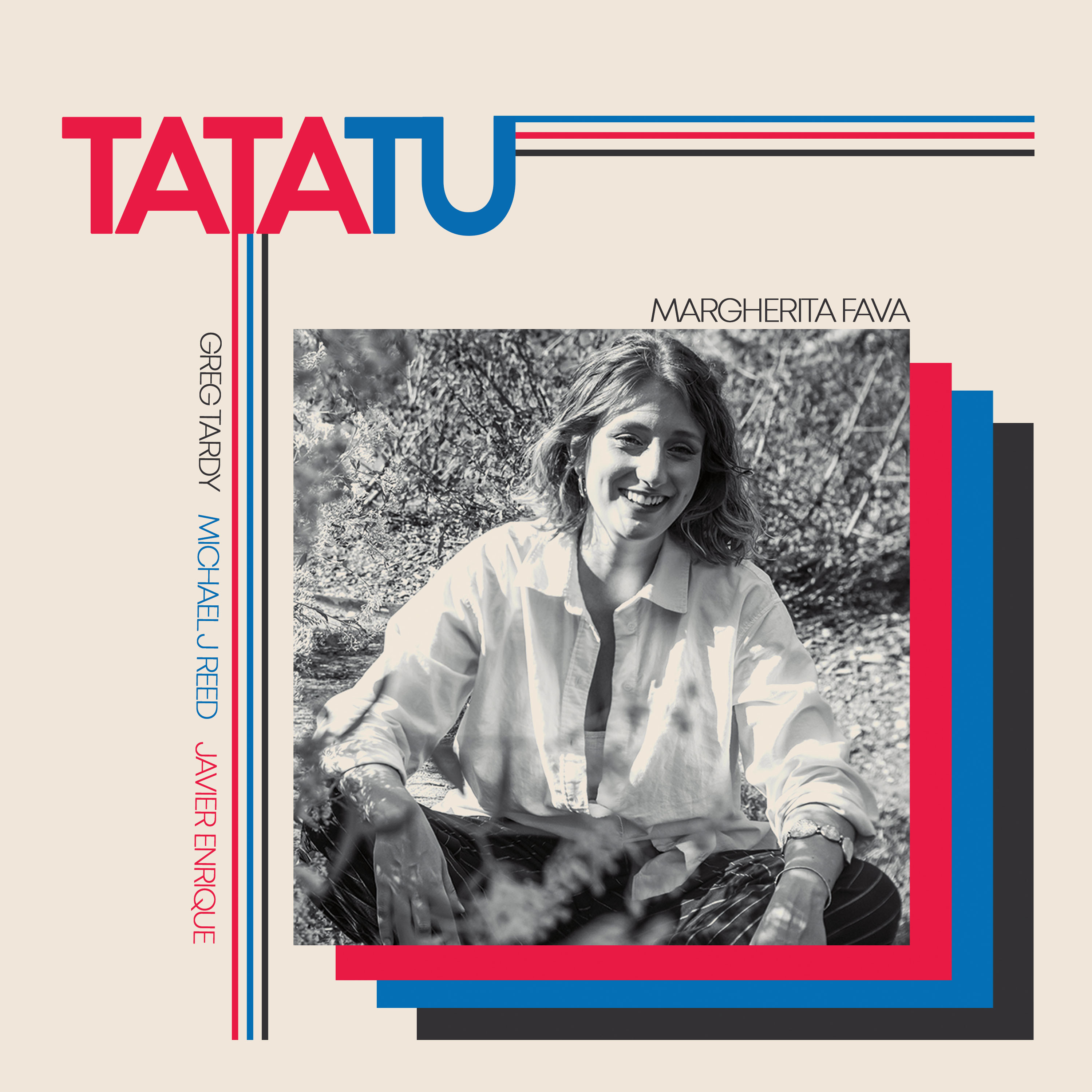
Margherita Fava’s new album TATATU: Produced by Rodney Whitaker, featuring Greg Tardy
Jazz today is full of whiz kids with plenty of virtuosity at their disposal but with little to say musically. The Italian-born Margherita Fava is something altogether different. The evidence is all over her debut recording, TATATU.
At 27, Fava is not only a fluent pianist but also a compelling composer and bandleader — creative, communicative, and less interested in surface flash than forging an emotional connection with listeners and expressing an individual concept through a band built in her image. Fava has a sharp mind for savvy musical forms but also a sensitive ear for expressive storytelling. She is not just interested in the what of music but the why. “She’s very soulful,” says the widely recorded bassist Rodney Whitaker, who produced TATATU and mentored Fava at Michigan State University, where he directs the award-winning jazz program. “I’ve never been around anyone writing at this stage in her life where the tunes have so much feeling. Even when she decides to be hip or more complicated harmonically, her music stays melodic. Everything is lyrical and singable.” “Bird of Passage,” for example, unfolds like a short story. It’s through-composed with a sinuous melody, folkish rhythm, multiple sections, and a Sephardic feeling carried by Greg Tardy’s eloquent clarinet. He improvises over a chromatic vamp, before Fava’s composed bridge leads to her articulate piano solo over new harmony. Tardy reenters with more melody and even more intense improvising over the vamp. A brief reprise of Fava’s theme leads to a surprising coda: a rhythmic vamp ignited by a drum solo. The bass-and-drum team of Javier Enrique and Michael J Reed underscores the shifting moods with patient maturity.
“I don’t micromanage,” says Fava. “I trust the band to do what they do. I talk in terms of energy and flow. Since I come from the countryside, I try not to be aristocratic. I want to be accessible. You don’t need a degree to understand my music.”
Fava’s quartet balances experience and youth. Tardy, whose thoughtful tenor saxophone and clarinet work brings gravatas to TATATU, is a widely respected veteran with a resume ranging from Andrew Hill and Elvin Jones to Tom Harrell and Dave Douglas. Fava studied composition with him at the University of Tennessee, where she received her master’s degree. Fava formed a close musical bond with Enrique and Reed, when they were students together at Michigan State. All have bright futures.
Fava, who remains based in Knoxville, Tenn., lists many favorite musicians, including pianists Gerald Clayton, Mulgrew Miller, Herbie Hancock, Red Garland, and Bud Powell, and composers Wayne Shorter, Hancock, Booker Little, Roy Hargrove and Dave Douglas. But throughout this program of six originals and two standards, her influences never overwhelm her personality.
From “Face Of,” a lovely song played without improvisation by piano and tenor, to “Restless Mind,” whose rhythmic gamesmanship morphs into a swinging minor blues, the music explores personalized emotions, colors, and textures. The open harmonic vistas of “Hard to Say'' merge with beguiling melodic repetition and counter-lines to create an expansive feeling of music that can go anywhere. An epic, suite-like form, “Resilience” captures the urgency of someone able to bounce back from adversity. The song opens with Tardy’s rubato tenor, before the music segues into contemporary funk with a strong rhythmic hook and then shifts into adventurous post-bop soloing over swinging time with free harmony.
Even the evergreens “Rhythm-a-ning” by Thelonious Monk and the “All the Things You Are” by Jerome Kern, sound refreshed. The latter, recast as a reharmonized waltz, cuts a particularly original profile. “I heard so often in my education that ‘you have to find your own voice,’” Fava says. “And I was like, ‘Ok, I will!’”